
Vietnam’s Electronics : EMS and PCBA Production Landscape
- August 5, 2026
- Posted by: marketing
- Category: Manufacturing
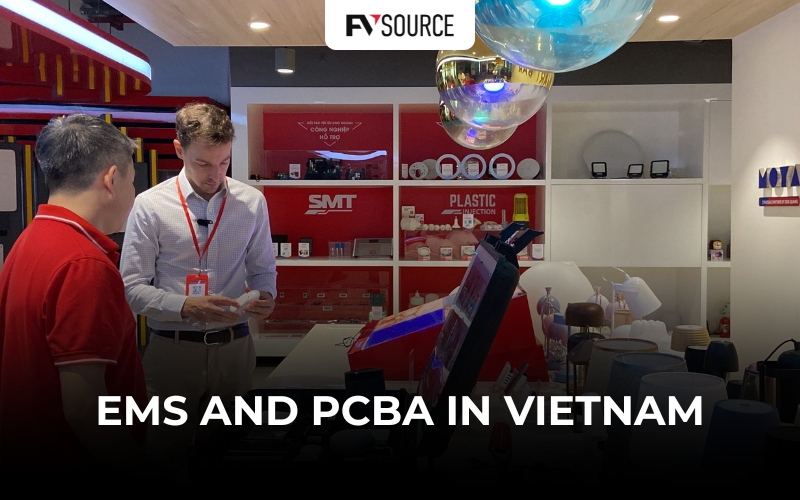
Vietnam is becoming an increasingly important electronics manufacturing base in Asia. As of April 15, 2026, the country’s electronics exports had reached USD 55.4 billion. Computers, electronic products and components alone generated USD 36.5 billion, an increase of 47.3% compared with the same period in 2025.
These figures provide a clear view of the sector’s scale, but they do not tell international buyers whether a particular manufacturer can manage an EMS or PCBA project successfully. Capabilities remain uneven. Some companies concentrate on basic assembly, while others can support SMT production, board-level inspection, component sourcing, programming, functional testing and final product integration.
For buyers considering Vietnam, the main question is therefore not simply whether electronics can be produced in the country. It is whether the selected manufacturing partner has the technical resources, processes and experience required to move a project from an initial prototype to consistent volume output.
Vietnam’s Electronics Manufacturing Landscape
Vietnam’s electronics sector has expanded rapidly over the past decade and has become one of the country’s most important export industries. In 2025, exports of computers, electronic products and components reached USD 107.75 billion, representing approximately 23% of Vietnam’s total export turnover. The category grew by 48.4% compared with the previous year and became the country’s largest export group by value.
The industry includes large multinational operations, foreign-invested contract manufacturers and a growing base of Vietnamese companies. Their activities range from component assembly and printed circuit board assembly to final integration, testing, packaging and export preparation.
Key products manufactured in Vietnam include computers, smartphones, telecommunications equipment, consumer electronics, home appliances, lighting systems, power supplies, sensors, smart home products and industrial control devices. The country also supports related processes such as plastic moulding, metal fabrication, cable assembly and packaging, which are often required to complete an electronic device.
This combination is particularly relevant for products that require more than a circuit board. A smart lighting device, for example, may include a PCBA, LED driver, sensor, plastic enclosure, metal parts, cables, firmware and packaging. A capable partner must coordinate these elements rather than treating each one as a separate operation.
The development of EMS in Vietnam can also be seen in the wider services offered by manufacturers. Some businesses that previously focused on final assembly are investing in SMT lines, automated optical inspection, programming stations and functional testing. Others are adding component purchasing, new product introduction, engineering coordination, box-build assembly and repair support.
However, this development is not uniform across the market. Large electronics export figures are partly driven by major international corporations and do not necessarily represent the capabilities available to every small or medium-sized buyer. Some manufacturers can manage complex, high-volume electronics programmes, while others are better suited to simpler products or lower quantities.
Buyers therefore need to examine what each potential partner can actually perform internally, which processes are subcontracted and whether its existing experience matches the requirements of the proposed device.
What EMS and PCBA Mean
EMS stands for Electronics Manufacturing Services. It refers to a manufacturing model in which a company manages some or all of the activities required to produce an electronic device.
Depending on its capabilities, an EMS partner may support component purchasing, printed circuit board assembly, programming, testing, final product integration, packaging, repair and planning. More advanced providers may also assist with design-for-manufacturing reviews, process preparation, material selection and product improvement.
PCBA stands for Printed Circuit Board Assembly. It refers specifically to the process of mounting and soldering electronic components onto a printed circuit board. Once assembled, programmed and tested, the board becomes the functional electronic core of a lighting system, sensor, controller, power supply, industrial device or connected consumer product.
PCBA is therefore one part of a broader EMS service. A board assembler may deliver only the completed circuit board. A full-service electronics manufacturer may also manage the enclosure, wiring, firmware loading, final assembly, testing, labelling, packaging and shipment preparation.
This distinction should be clarified at the beginning of a sourcing programme. Two companies may both describe themselves as electronics manufacturers, but their actual scope of work can be very different.
Why PCBA Matters in Electronics Manufacturing
The assembled circuit board directly affects the reliability and functionality of an electronic product. A device may have a strong design, suitable materials and a well-made enclosure, but it can still fail if the components on the board are placed, soldered or tested incorrectly.
Possible defects include weak solder joints, solder bridges, missing components, incorrect orientation, heat damage, contamination and unapproved part substitutions. These problems are not always visible after the board has been installed inside the finished device.
A product may therefore appear correct during a visual inspection but fail during operation or after a period of use. This creates warranty claims, customer complaints, returns and potentially serious safety concerns. PCBA also plays a major role in scalability. Producing a few working prototypes under close engineering supervision is very different from manufacturing thousands of units across several shifts.
During volume manufacturing, the process must repeatedly achieve the same result. This requires controlled machine settings, clear work instructions, trained operators, material traceability, inspection checkpoints and documented testing procedures.
International buyers should therefore look beyond the final assembly area or product showroom. They need to understand how components are received and stored, how solder paste and placement are controlled, what inspection methods are used and how defects are recorded and corrected.
Why International Buyers Are Looking at Vietnam
Supply chain diversification is one of the main reasons international companies are examining Vietnam. Businesses that previously concentrated electronics manufacturing in one country are looking for additional locations to reduce dependence on a single production base, logistics route or component network.
Vietnam offers an established export-oriented manufacturing environment and access to the wider Asian electronics supply chain. It also has supporting capabilities in plastics, metals, cables, lighting components, mechanical assembly and packaging.
This allows buyers to consider Vietnam for products that combine electronic and non-electronic elements. Instead of moving only the circuit board assembly, a company may be able to develop a broader programme covering the enclosure, wiring, final integration and packing.
The country can also be relevant for specialised and medium-volume projects, including smart lighting, sensors, industrial controls, connected devices and power-related products. These opportunities are not limited to the large consumer electronics programmes managed by multinational corporations.
Nevertheless, moving an existing product to Vietnam is not automatic. Many electronic components may still need to be imported, and the available engineering depth varies significantly between manufacturers. Cost, lead time and minimum order quantities may also differ from the buyer’s existing supply base.
Vietnam should therefore be assessed as a potential manufacturing option rather than assumed to be a direct replacement for another country.
How Vietnamese Factories Are Expanding into EMS and PCBA
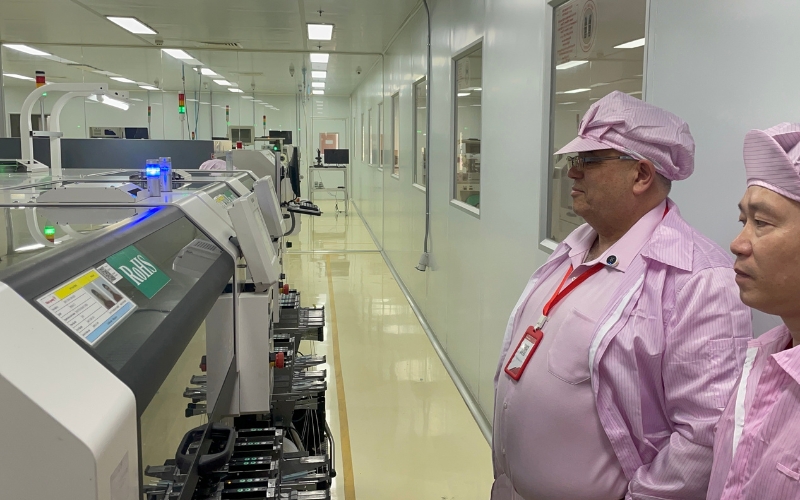
The move into electronics manufacturing services often begins with final product assembly. A company may initially receive completed circuit boards and other components from its customer, install them in the enclosure and perform basic functional checks.
As its experience develops, it may add PCB assembly equipment, automated inspection, soldering processes, programming stations and more advanced test systems. The next stage may include responsibility for component purchasing, engineering preparation, pilot builds and complete box-build assembly.
Lighting manufacturing provides a clear example. A company that previously produced conventional fixtures may begin making LED products and later expand into drivers, control boards, sensors, wireless modules and connected lighting systems.
This transition requires more than purchasing an SMT line. The manufacturer also needs qualified engineers, trained operators, controlled processes, suitable storage conditions, preventive maintenance and clear production documentation.
The same development can be found in smart home devices, control systems and industrial equipment. These products may combine circuit boards, firmware, displays, sensors, cables, switches, plastic housings and metal parts.
The more elements involved, the more important coordination becomes. A problem with the board may affect the enclosure design, power supply or functional test. Engineering, purchasing and assembly teams must therefore work together rather than manage each process in isolation.
Buyers should also confirm whether the advertised equipment is used regularly. Owning an SMT line does not necessarily mean that a company has strong experience with complex boards or stable volume manufacturing.
Actual capability should be demonstrated through current processes, relevant products, engineering discussions and verifiable production records.
From Prototype to Mass Production
A reliable EMS partner should be able to manage the transition from product development to repeatable volume output. This process normally includes prototype development, initial build validation, pilot production and mass manufacturing.
The prototype stage confirms whether the design can be assembled and whether the finished board performs as intended. It can reveal issues involving board layout, component availability, soldering, programming, thermal management, assembly access or test coverage.
Feedback at this stage should be used to improve the design and prepare a more stable manufacturing process. However, a successful prototype does not prove that the manufacturer is ready for a large order.
Early samples often receive additional manual attention and direct supervision from engineers. These conditions may not reflect the normal workflow that will be used across multiple workers, machines and shifts.
Pilot production is therefore essential. It allows both parties to test the planned process under more realistic conditions before committing to larger quantities.
During the pilot run, the teams can review material handling, machine setup, work instructions, operator training, cycle times, inspection methods and functional testing. Defects should be recorded and analysed so that corrective actions can be introduced before volume output begins.
Once the project reaches mass manufacturing, the level of control must increase further. The partner must coordinate component deliveries, machine availability, workforce planning, testing capacity and shipment schedules while maintaining the agreed specifications.
Production data, defect trends and test results should remain visible throughout this stage. Problems need to be reported early rather than discovered during final inspection or after shipment.
The ability to move from a good prototype to consistent volume output is often a better indicator of long-term capability than the quality of the first sample alone.
How to Evaluate an EMS Partner in Vietnam
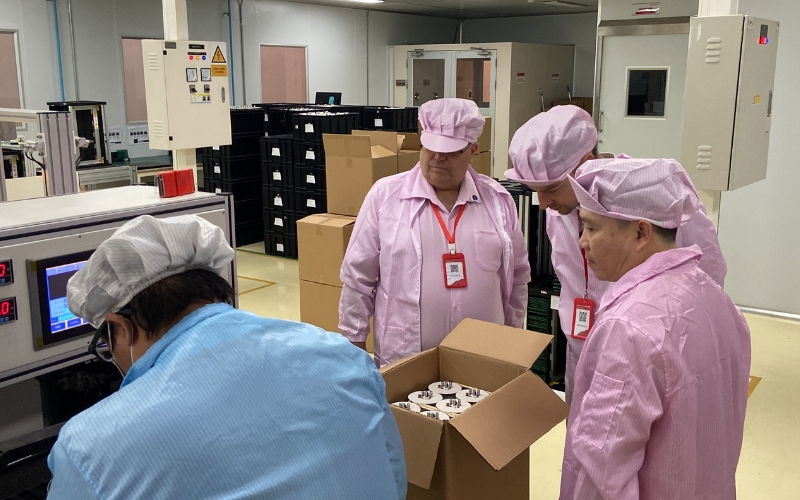
Evaluating an electronics manufacturing partner requires more than reviewing a quotation, company profile or equipment list. Buyers need to examine the technical, operational and commercial systems that will support the project.
The assessment should begin with technical capability. The manufacturer must understand the board dimensions, component density, package types, soldering methods, firmware requirements and expected testing procedures. Its engineers should be able to discuss potential risks rather than simply confirm that the product can be made.
Production equipment should then be reviewed in relation to the actual project. Relevant machines may include solder paste printers, pick-and-place systems, reflow ovens, wave or selective soldering equipment, automated optical inspection and functional test stations.
The brand or age of the machines is not enough to demonstrate capability. Buyers should also examine setup control, maintenance, calibration, operator training and the way process parameters are recorded.
Quality control needs to cover the complete workflow. This may include incoming component verification, first-article checks, solder paste inspection, automated optical inspection, in-circuit testing, functional testing and final product checks.
The company should be able to explain how defective units are isolated, analysed and repaired. Inspection records should lead to corrective actions rather than simply documenting the number of rejected units.
Engineering support is another important consideration. The team should understand bills of materials, Gerber files, drawings, specifications and test requirements. It should also be able to identify manufacturing risks, prepare work instructions, investigate defects and communicate clearly with the buyer’s engineers.
Experience with similar products can reduce the learning curve. A partner familiar with smart lighting may already understand LED drivers, heat management, sensors and lighting-related tests. A company producing industrial controllers may have stronger experience with complex functional testing and traceability.
The objective is not necessarily to find an exact copy of the buyer’s product in the company’s portfolio. Instead, the buyer should look for experience with comparable technologies, materials, standards and operational risks.
Supply chain management must also be examined carefully. Electronics manufacturing depends on component availability, approved vendors, lead times, storage conditions and traceability. The parties should agree on who will purchase each component and how shortages will be handled.
No material substitution should take place without written approval. Two components may appear equivalent but have different performance, certification status, lifespan or availability.
Compliance requirements will depend on the product and its destination market. Buyers may need to review quality management systems, RoHS controls, product safety documentation, environmental requirements or customer-specific standards.
Certificates should be valid, relevant to the actual site and connected to the processes being evaluated. A general certificate does not automatically prove that a particular product or manufacturing line meets the buyer’s requirements.
Finally, communication and transparency should be assessed throughout the evaluation process. A reliable partner should explain limitations, risks, delays and defects clearly.
For international buyers, early and accurate reporting is often more valuable than an immediate promise. A manufacturer that raises realistic concerns may be more dependable than one that agrees to every requirement without asking detailed questions.
Common Challenges and Risks
One of the main challenges in Vietnam is the difference between claimed and actual capability. A company may promote itself as a full EMS provider while completing only final assembly internally and subcontracting most board-level processes.
Subcontracting is not necessarily a problem, but it must be transparent. Buyers should know where PCB fabrication, component placement, programming, coating and testing are performed and how external partners are controlled.
Another risk is the gap between prototypes and volume manufacturing. A strong initial sample may hide weaknesses in operator training, process discipline, documentation or test capacity.
Component management can also create delays. Many electronic parts are sourced through regional or international supply chains, which can expose a project to long lead times, minimum purchase quantities and shortages.
Documentation standards vary between manufacturers. Some maintain detailed records and traceability, while others rely heavily on informal communication and the experience of individual employees.
These risks do not mean that Vietnam is unsuitable for electronics manufacturing. They show why buyers need to validate the process, conduct pilot runs and maintain regular follow-up after selecting a partner.
Why Local Support Can Help
Evaluating an electronics manufacturer remotely can be difficult. Company presentations and quotations rarely show how materials are stored, how machines are controlled or how defects are investigated.
Local support can help international buyers identify suitable candidates, communicate technical requirements and examine capabilities on site. It can also support sample development, pilot runs, inspections, production follow-up, warehousing and shipment coordination.
For an EMS or PCBA project, an on-site assessment may cover SMT processes, soldering controls, inspection equipment, testing methods, traceability systems, engineering resources and relevant product experience.
Local follow-up can also help prevent communication gaps. When a component is delayed, a test fails or an engineering question appears, someone close to the site can clarify the situation and make sure that the issue is addressed before it affects the complete order.
Conclusion
Vietnam’s electronics industry has reached significant scale, while local EMS and PCBA capabilities are gradually becoming broader and more advanced. The opportunity now extends beyond conventional final assembly into board population, programming, smart product integration, testing and complete box-build support. However, this capability is concentrated among selected manufacturers rather than available equally across the market.
International buyers should therefore look beyond export figures, machine lists and successful prototypes. Technical capability, equipment control, testing, engineering support, relevant experience, component management, compliance and communication all need to be reviewed together. Vietnam can provide a valuable additional manufacturing base for electronics projects. Success, however, depends on selecting a partner that can turn a working design into stable, repeatable and scalable output.

