
Manufacturing Outsourcing in Vietnam: A Practical First Step Before Investing
- November 5, 2026
- Posted by: marketing
- Categories: Manufacturing, Market Entry, Uncategorized
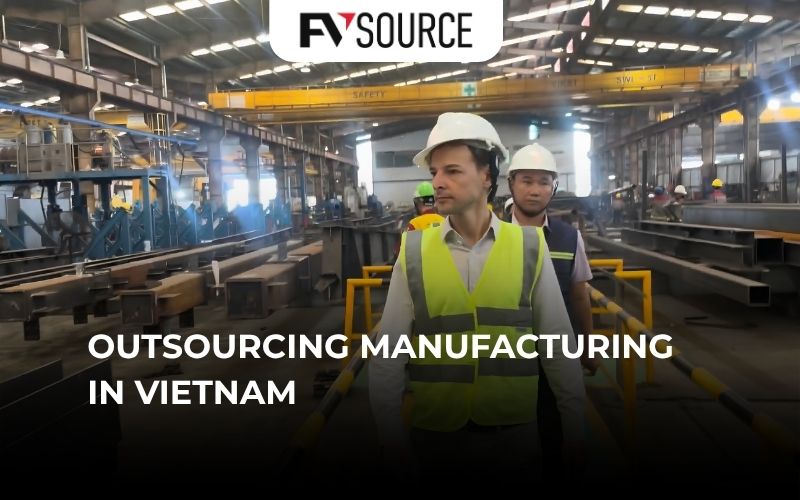
Entering Vietnam does not necessarily mean building a factory, hiring a local team, or making a large capital investment from the start. For companies that are interested in the country’s manufacturing base but are still assessing demand, suppliers, or long-term potential, outsourcing can offer a more measured way to begin.
The idea is straightforward: work with an existing Vietnamese manufacturer first, learn how the supply chain performs in practice, and use that experience to determine whether a deeper commitment makes sense.
Outsourcing is therefore more than a production arrangement. Used strategically, it can serve as a first step into the Vietnamese market.
Outsourcing as a Lower-Commitment Entry Point
Setting up local manufacturing requires more than securing production capacity. A company may need to consider facilities, equipment, employees, compliance, supplier networks, quality systems, and ongoing operational management. These commitments can make sense once production volumes and market potential are well established, but they may be difficult to justify at an early stage.
Outsourcing changes the starting point. Instead of building production capabilities internally, a foreign company can work with an established manufacturer that already has the relevant equipment, workforce, processes, and local operating experience. This reduces the amount of infrastructure the company needs to establish before testing whether Vietnam is the right fit for its production needs.
The benefit is not simply lower cost. It is the ability to learn before making a larger commitment.
A company can assess supplier performance, product quality, lead times, communication, and the practical realities of working in Vietnam without immediately taking responsibility for an entire local manufacturing operation.
That makes outsourcing particularly relevant for companies entering Vietnam for the first time or diversifying production from another country.
For companies considering Vietnam, choosing how to enter the market is an important early decision. Establishing a local entity or building manufacturing operations from scratch is not always necessary at the beginning. Depending on their objectives, companies may first explore outsourcing, local distribution partnerships, or other market entry arrangements.
In this video, FVSource explores how foreign companies can assess Vietnam before making a significant investment, including the role of manufacturing outsourcing in testing the market and evaluating longer-term opportunities.
Watch the discussion: Vietnam Entry Trap – How to Invest in Vietnam
How to Test Vietnam Through Manufacturing Outsourcing
A lower-commitment approach still needs to be structured. Simply sending an RFQ to several factories and choosing the lowest quotation does not provide enough information to determine whether a supplier is suitable for a long-term relationship.
A more reliable process can be built around five stages:
1. Identify suitable manufacturers
The first step is to look beyond whether a supplier can technically produce a product. The relevant question is whether its capabilities match the company’s actual requirements.
Production processes, machinery, materials, expected volumes, quality standards, certifications, export experience, and target markets all matter. A supplier that looks suitable on paper may not have the capacity or processes required for a specific project.
2. Qualify before committing volume
Once potential suppliers have been identified, their capabilities should be verified. This can include reviewing production facilities, quality-control processes, previous projects, available capacity, management practices, and relevant certifications. For international buyers, it is also important to understand who they are actually dealing with and whether the company has the resources to manage the proposed production.
The objective is not to eliminate every uncertainty. It is to reduce avoidable ones before production begins.
3. Start with a manageable order
The first production run does not need to represent the company’s full sourcing volume. Samples, prototypes, pilot orders, or limited production runs can provide useful evidence about how a supplier performs under real working conditions. Technical discussions may reveal capability, but actual production reveals consistency.
This stage also gives both sides an opportunity to establish working routines around specifications, communication, quality expectations, documentation, and delivery schedules.
4. Evaluate actual performance
After the first order, the company has something more valuable than a supplier presentation: operational evidence.
Was the quality consistent? Did the supplier meet the agreed timeline? How quickly were issues addressed? Was communication clear when specifications changed? Could the manufacturer maintain the required standard as production progressed?
These observations provide a stronger basis for deciding whether to continue than price comparisons alone.
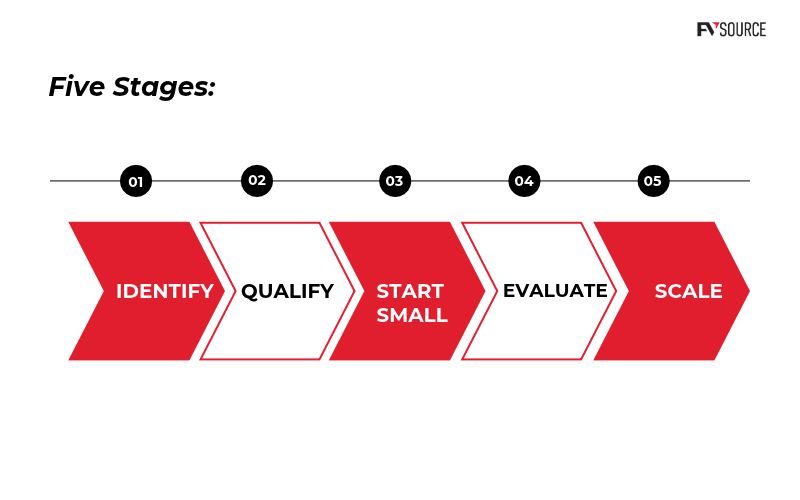
5. Scale when the relationship proves itself
If the initial orders perform well, production can gradually increase. The relationship may develop from occasional orders into a long-term supplier partnership or a broader sourcing program.
Scaling should follow evidence rather than assumptions. The purpose of starting small is precisely to give the company enough information to decide how far it should go.
What Still Needs to Be Managed
Outsourcing can reduce the level of commitment required at the beginning, but it should not be confused with a hands-off approach.
A company may avoid investing immediately in its own factory, production equipment, or local manufacturing workforce. At the same time, it remains responsible for making sure the supplier can deliver what the business actually needs.
Supplier qualification still matters. So do product specifications, quality control, production monitoring, delivery planning, and communication.
This distinction is important because the risks do not disappear when production is outsourced; they change form.
For example, a company may have less exposure to fixed manufacturing infrastructure, but it becomes more dependent on the performance of its external partner. Poor supplier selection can lead to quality problems, delays, inconsistent production, or difficulties scaling later.
The right objective, therefore, is not to remove responsibility. It is to limit the scale of the initial commitment while gathering real information about the market and the supplier base.
That makes outsourcing a more practical testing mechanism, rather than simply a way to transfer production elsewhere.
From First Orders to a Deeper Vietnam Presence
The first outsourcing project does not have to determine the company’s entire future in Vietnam.
For some companies, a successful supplier relationship may be enough. Others may gradually increase sourcing volumes, add additional Vietnamese suppliers, develop a broader local supply chain, or eventually establish their own operations.
The important point is that these decisions can be made with more information.
A company that has already worked with Vietnamese manufacturers has a clearer understanding of production capabilities, supplier responsiveness, quality expectations, logistics, costs, and the practical demands of managing operations from abroad. That experience can make subsequent decisions more grounded than an investment based solely on market research.
This creates a gradual path:
Initial outsourcing → Pilot production → Supplier evaluation → Long-term sourcing → Deeper local presence
Not every company needs to reach the final stage. In some cases, outsourcing may remain the most appropriate model. In others, the experience gained through outsourced production may provide the foundation for a larger manufacturing or investment strategy.
Conclusion
Entering Vietnam does not have to be an all-or-nothing decision.
For companies that are interested in the country’s manufacturing capabilities but are not yet ready to establish their own operations, outsourcing can provide a practical middle ground. It allows them to work with local manufacturers, test production under real conditions, and assess whether the relationship can support future growth.
The strategic value lies in the sequence: start with a manageable commitment, gather evidence, and scale when the business case becomes clearer.
Rather than deciding how deeply to invest in Vietnam before gaining operational experience, companies can use outsourcing to build that experience first.

