
Build-to-Print Manufacturing in Vietnam: How to Qualify a Supplier
- October 15, 2026
- Posted by: marketing
- Categories: Manufacturing, Uncategorized
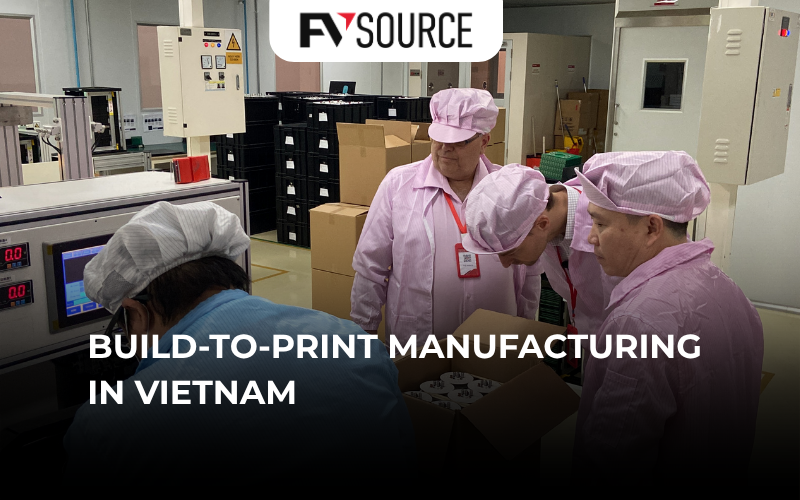
For industrial buyers, outsourcing production is rarely just a matter of finding a factory with the right machines. When a product is manufactured to detailed drawings and specifications, the real challenge is making sure the supplier can interpret those requirements correctly, execute them consistently, and maintain the same level of quality as production scales.
This is where Build-to-Print manufacturing comes in. Vietnam has become an increasingly relevant manufacturing base for companies looking to diversify production and develop supplier networks in Asia. Yet a supplier’s location, machinery list, or initial quotation tells only part of the story.
For Build-to-Print projects, buyers need to look more closely at how a supplier handles technical requirements, quality control, documentation, production capacity, and communication.
The key question is not simply, “Can this factory make my part?” It is: “Can this supplier consistently manufacture my part to the required specification?”
What Is Build-to-Print Manufacturing?
Build-to-Print refers to a manufacturing model in which the buyer provides the product design and detailed technical requirements, while the supplier is responsible for producing the part or product according to those specifications.
The buyer may provide 2D drawings, 3D CAD files, material requirements, tolerances, surface finishes, inspection criteria, and other production instructions. The supplier then translates this technical package into an actual manufacturing process.
This differs from a Build-to-Spec or more collaborative OEM arrangement, where the manufacturer may have a greater role in product design, engineering, or development.
Build-to-Print can be particularly attractive when an industrial buyer already has an established product design and wants to outsource production without giving up control over the technical specifications.
However, having a complete drawing does not automatically make production straightforward. A supplier still needs the technical capability to interpret the requirements, identify manufacturing constraints, control critical dimensions, and reproduce the same result consistently. That makes supplier qualification a central part of successful Build-to-Print sourcing.
Choosing a manufacturing partner requires more than reviewing a quotation or a list of available machines. Watch our discussion on how to qualify the right manufacturing partner in Vietnam.
What Should Industrial Buyers Expect from a Build-to-Print Supplier?
A capable Build-to-Print supplier should demonstrate more than production capacity. Buyers should look at five areas when assessing whether a supplier is suitable for a project.
Technical understanding
The first requirement is the ability to understand the buyer’s technical documentation.
A supplier should be comfortable working with engineering drawings and CAD files, while understanding dimensions, tolerances, materials, surface treatments, and other specifications that affect production.
More importantly, the supplier should be able to identify unclear or potentially problematic requirements before manufacturing begins. Asking relevant technical questions is often a positive sign. It shows that the supplier is actively reviewing the project rather than simply accepting the drawing and moving directly to a quotation.
Relevant manufacturing capability
The supplier must have the right processes and equipment for the specific part being manufactured.
Depending on the project, this could involve CNC machining, sheet metal fabrication, stamping, casting, injection molding, welding, or surface treatment. The important point is not how many machines a factory has, but whether its capabilities are relevant to the buyer’s actual requirements.
Buyers should also understand which processes are performed in-house and which are subcontracted. Outsourcing is not necessarily a problem, but critical processes should be transparent and properly controlled.
Quality control and inspection
Build-to-Print manufacturing leaves limited room for interpretation. If a drawing specifies a particular tolerance or material, the supplier needs a reliable process to verify that the finished part meets it.
Buyers should therefore examine how quality is controlled at different stages, from incoming materials to in-process checks and final inspection.
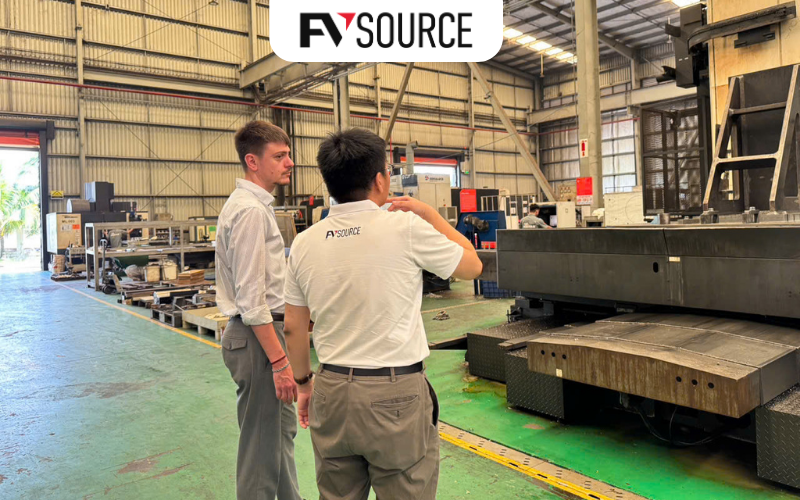
The availability of appropriate measurement equipment, inspection reports, and documented quality procedures can provide a much clearer picture of production capability than a company profile alone.
Traceability and documentation
For many industrial products, knowing what was produced is only part of the requirement. Buyers may also need to know which material was used, when it was produced, which batch it belongs to, and how it was inspected.
Material certificates, batch records, inspection reports, and revision control can become important when quality issues arise or when production needs to be traced back to its source.
Strong documentation is therefore not simply administrative work. It supports accountability throughout the manufacturing process.
Capacity and communication
Finally, a supplier needs to be able to support the project beyond the first production run.
Can it handle the expected volume? Can it maintain consistent quality as quantities increase? Can its team communicate clearly when technical questions arise?
For international buyers, communication is especially important. A supplier that responds quickly but does not understand the technical issue is not necessarily more effective than one that takes time to provide a precise answer.
How Should a Supplier Handle a Build-to-Print Project?
The way a supplier manages a Build-to-Print project can reveal its technical maturity before production even begins. The process typically starts with a review of the technical documentation, including confirmation of the latest approved drawing revisions. Any missing information, conflicting specifications, or unclear requirements should be resolved with the buyer to establish a common understanding of the project.
The supplier then assesses manufacturing feasibility and identifies potential technical constraints. Before proceeding, both parties should agree on the acceptance criteria and inspection requirements to establish a clear basis for evaluating the finished product. Once these elements are confirmed, the supplier can prepare a quotation reflecting the agreed technical scope, production assumptions, and delivery expectations.
Depending on the project’s complexity, risk level, and customer requirements, additional verification may involve a prototype, first article inspection, or sample approval before full-scale production. During regular production, any changes to drawings or specifications should be properly documented, communicated, and approved to maintain consistency.
For buyers, a well-managed process provides greater confidence that technical requirements will be understood and consistently applied throughout production.
What Should Buyers Provide to the Supplier?
Build-to-Print is a shared process. Even a capable supplier cannot manufacture reliably if the technical information provided by the buyer is incomplete or ambiguous.
A typical technical package may include:
- 2D engineering drawings and 3D CAD files
- Bill of Materials (BOM)
- Material specifications
- Dimensions and tolerances
- Surface treatment or finishing requirements
- Applicable quality standards
- Inspection requirements
- Expected production quantities
- Packaging requirements
- Delivery requirements
The level of detail will vary by project, but the principle remains the same: the clearer the technical package, the easier it is for the supplier to assess feasibility, quote accurately, and produce consistently.
This also gives buyers a useful way to identify suppliers that are genuinely reviewing the project. A supplier that immediately quotes without asking about unclear specifications may not necessarily have understood the full manufacturing requirement.
What Can Go Wrong If Supplier Capability Is Not Properly Verified?
Problems in Build-to-Print manufacturing often arise when a supplier’s actual capabilities do not match the project’s technical and production requirements. These gaps may remain unnoticed during initial discussions and become apparent only after production begins.
One common risk is inconsistent quality at higher production volumes. A supplier may successfully manufacture a small batch but struggle to maintain the same precision and consistency during larger runs, resulting in higher defect rates, rework, or rejected parts.
Uncontrolled subcontracting can create additional challenges, particularly when critical processes such as heat treatment or surface finishing are handled externally. Limited oversight may lead to variations in quality, longer lead times, and unclear responsibility when defects occur.
Technical miscommunication and poor revision control can also cause production errors. Manufacturing against outdated drawings or misunderstood specifications may result in parts that fail to meet the required standards, while insufficient traceability makes it harder to identify affected batches and resolve quality issues.
For industrial buyers, these problems can increase costs, delay deliveries, and disrupt downstream operations. Identifying potential capability gaps early helps reduce the likelihood of costly problems once production scales.
How to Qualify a Build-to-Print Supplier in Vietnam
Qualifying a Build-to-Print supplier requires evidence that its capabilities match the project’s technical and production requirements. A structured assessment can focus on four key steps.
- Review relevant manufacturing experience.
Examine previous projects involving similar parts, materials, or technical requirements to determine whether the supplier has relevant experience. - Verify actual production capabilities.
Assess whether the supplier can perform the required operations, identify any subcontracted processes, and review how critical production activities are controlled. - Evaluate quality performance.
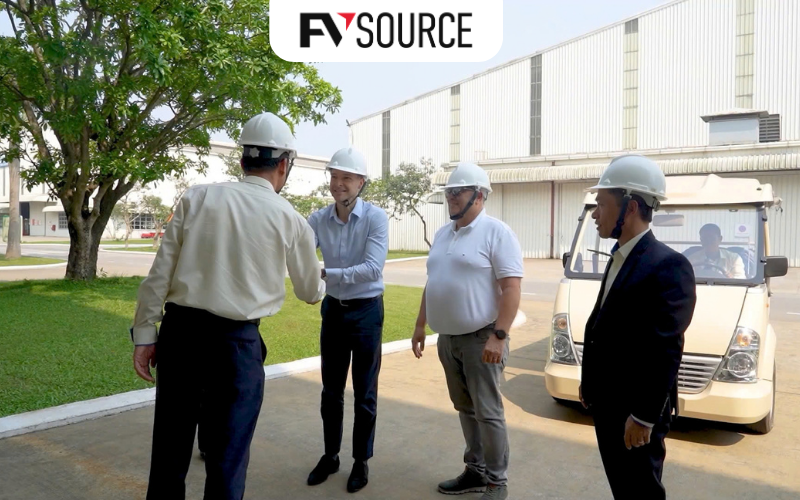
Examine inspection records, quality procedures, and previous production results. Where appropriate, a factory audit can provide additional evidence of actual operating conditions. - Validate performance before scaling.
Depending on project complexity, risk, and customer requirements, qualification may include sample evaluation, a first article inspection, or a pilot order. The results can help determine whether the supplier is ready for larger production volumes.
The goal is to select a supplier based on demonstrated capabilities rather than initial claims or quotations alone.
From Technical Drawings to Reliable Production
Build-to-Print sourcing is not simply about finding a factory with the right machines. It is about finding a supplier that can consistently translate technical specifications into compliant and repeatable production.
For industrial buyers considering Vietnam, this means looking beyond price and equipment lists. Technical understanding, relevant manufacturing capabilities, quality control, traceability, capacity, and communication all matter when evaluating a potential supplier.
A structured qualification process can help buyers move through three stages: finding a factory, validating its capabilities, and building a reliable manufacturing relationship.
Ultimately, the strongest Build-to-Print supplier is not necessarily the one that says “yes” to every drawing. It is the one that understands the requirements, raises the right questions, demonstrates its capabilities, and can deliver the same standard of production consistently as the relationship grows.

