
How to Assess Steel Fabricators in Vietnam for International Projects
- September 24, 2026
- Posted by: marketing
- Category: Manufacturing
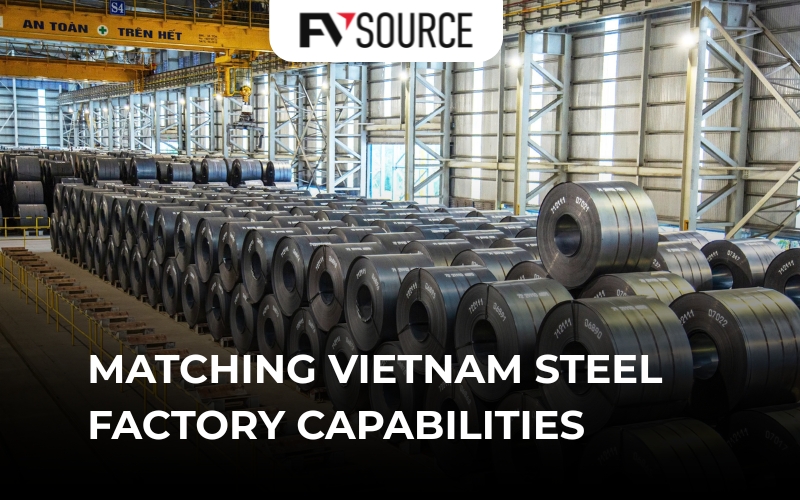
Vietnam’s steel industry is moving beyond high-volume commodity production toward higher-value products and more technically demanding manufacturing. In February 2026, the Vietnamese government approved a new steel development strategy targeting higher-quality products, international standards, greater product diversification, and deeper participation in global value chains.
The market is also expanding in scale. In the first five months of 2026, Vietnam produced 12.55 million tonnes of crude steel, up 26.4% year on year, while finished steel production reached 14.91 million tonnes, up 14.5%. For foreign buyers, this growing industrial base creates more sourcing options, including steel fabricators capable of producing structural components and project-specific assemblies. Yet a larger supplier pool does not necessarily make supplier selection easier. Without careful screening, more available factories can also increase the risk of choosing a supplier whose production profile does not match the project.
The critical question is therefore not simply whether a fabricator can work with steel. It is whether its actual technical capability, the equipment, processes, engineering resources, and quality systems it can apply, matches the project’s specifications, quality expectations, volume, certification, and delivery criteria.
Define Your Project Requirements Before Choosing a Steel Fabricator
For foreign buyers sourcing structural steel or fabricated components in Vietnam, supplier evaluation should begin with a complete project specification rather than a factory shortlist. Steel fabrication can cover very different scopes, from standard beams and plates to complex structures, precision components, and project-specific assemblies.
Before requesting quotations, establish the project’s core parameters, including:
- Structural configuration: spans, frame geometry, member dimensions, connection types, and design complexity.
- Material specification: steel grade, thickness, section type, surface treatment, and applicable standards.
- Fabrication tolerance: acceptable deviations for cutting, drilling, assembly, welding, and finished components.
- Quantity and weight: total tonnage, number of assemblies, maximum component weight, and production schedule.
- Testing and quality: NDT, weld inspection, dimensional checks, material verification, and inspection criteria.
- Certification and documentation: required quality systems, welding qualifications, material certificates, inspection reports, and traceability records.
- Delivery requirements: packaging, shipment format, marking, installation sequence, and required delivery date.
This technical brief should be shared with every shortlisted supplier. Standardizing the specifications makes quotations easier to compare because each fabricator is responding to the same project scope rather than defining the scope independently.
The destination market should also be considered early. International projects can involve different technical and quality frameworks that affect how a factory must design, fabricate, inspect, and document the product. For European structural steel, for example, EN 1090 may be relevant, while AWS requirements may apply to projects with specific welding standards.
A factory may be able to physically fabricate a structure but still lack the qualified personnel, certification, or documentation needed to demonstrate conformity. The practical rule is therefore simple: define the acceptance criteria before asking for a quotation.
How to Evaluate a Vietnam Steel Fabricator’s Actual Capability
Once the project specification is clear, the next challenge is separating claimed technical competence from demonstrated performance. Here, capability refers to what a factory is technically equipped and qualified to do, while capacity refers to how much work it can produce and allocate within a given period. The distinction matters because a supplier may have the technical competence to fabricate a product but lack sufficient throughput or available production time for a particular project.
Vietnamese manufacturers vary significantly in equipment, fabrication processes, engineering resources, quality systems, and certifications. A certificate or website statement should therefore be treated as a starting point for verification, not the final decision.
Verify the Factory Through Production Evidence
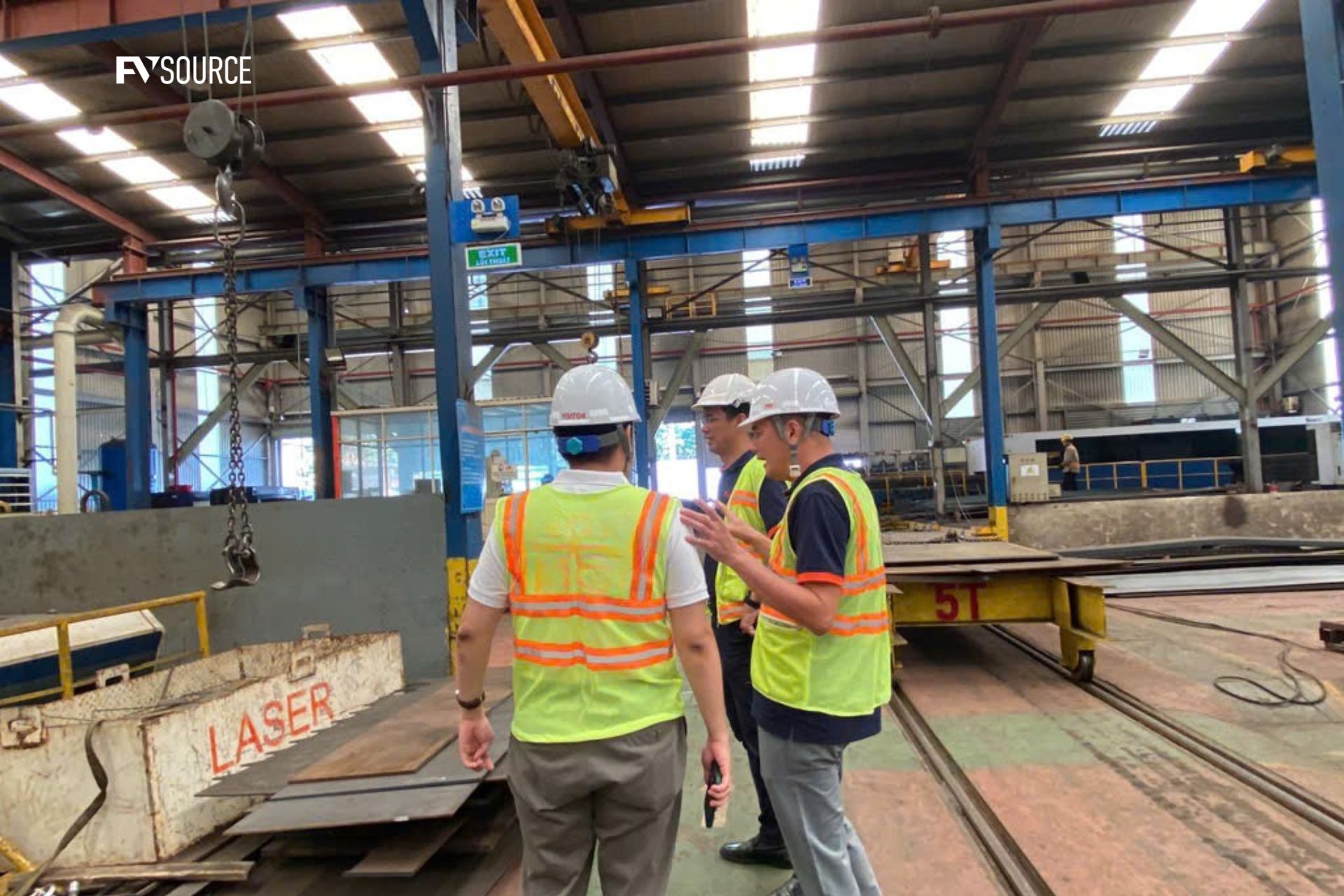
The strongest supplier evaluation combines documentation with a factory visit or structured pre-qualification process. Buyers should check whether the equipment, production flow, workforce, and quality systems observed on site match the capabilities presented during the quotation stage.
Start with the fabrication process. CNC plasma or laser cutting can affect dimensional accuracy and repeatability, while drilling, profiling, bending, and assembly equipment must match the project’s component sizes and tolerances.
Welding deserves particular attention. Buyers should review whether welding procedures are documented, confirm that welders are qualified for the relevant processes, and examine whether inspection records are available. A factory may have extensive welding equipment but still lack the process controls required for demanding structural applications.
Surface treatment should be evaluated in the same way. If the project requires blasting, painting, galvanizing, or another coating system, determine whether the process is performed in-house or outsourced and how surface preparation, coating thickness, and final inspection are controlled.
The objective is not simply to confirm that a factory owns the right machines. Buyers should establish whether those machines, processes, and personnel can consistently deliver the required product.
Check Certifications, Quality, and Traceability
Certification is one of the easiest areas to misunderstand when evaluating a steel fabricator. A factory may state that it is “ISO certified,” but ISO 9001 addresses quality management systems; it does not automatically demonstrate that the factory can fabricate a specific structural product to the required engineering standard.
Certification should therefore be evaluated at the facility, product, and process level.
For European structural steel projects, EN 1090 may be relevant depending on the product and application. For projects with specific welding standards, applicable AWS requirements may also need to be considered. The key is not simply whether a factory holds a certification, but whether that certification actually covers the work being sourced.
Before accepting a certificate, check:
- Issuing body
- Certificate scope
- Covered manufacturing site
- Validity period
- Applicable products or processes
- Relevant fabrication criteria
Where possible, verify the certificate through the certification body rather than relying solely on a supplier’s website or presentation.
Technical documentation should also support the certification. Depending on the project scope, buyers may need to review welding procedure qualifications, welder qualifications, inspection and testing plans, material certificates, NDT records, and previous project documentation.
Material traceability is another important consideration. Buyers should determine whether mill certificates and heat numbers can be linked to the material used in specific fabricated components. This is particularly important for projects requiring strict compliance documentation or future audits.
Certification and documentation therefore complement the factory visit: one establishes whether the supplier’s formal qualifications cover the work, while the other provides evidence of how those qualifications are applied in production.
Assess Fabrication Capacity Against the Project
Once technical competence and formal qualifications have been established, the next question is whether the fabricator can actually accommodate the project’s workload. Capacity refers here to the volume of work, production throughput, and available resources that a supplier can allocate within a specific production window.
Annual tonnage alone is not a reliable measure of a fabricator’s suitability. A supplier may advertise high production output but lack the workshop dimensions, crane capacity, equipment, or available production time required for a specific project.
During a factory evaluation, consider:
- Maximum component dimensions and individual weight
- Required production volume
- Fabrication complexity
- Equipment availability
- Skilled-welder availability
- Current production load
- Lead time for materials
- Available capacity during the project’s production window
For example, a factory may have sufficient annual output but be unable to handle unusually large assemblies or allocate sufficient production time when the buyer needs fabrication to begin.
This distinction between installed capacity and usable capacity is critical for foreign buyers. The relevant question is not “How many tonnes can you produce per year?” but “How much of the required fabrication capacity can you realistically allocate to this project?”
Manage Supply Chain and Coordination Risk
Technical competence and available production throughput are only part of supplier suitability. A factory can meet the project specifications on paper and still become a poor partner if it cannot secure materials, control outsourced processes, or coordinate engineering and delivery effectively.
Vietnam’s manufacturing sector reported an average machinery and equipment utilization rate of 74.8% in Q1 2026, while 30.7% of surveyed manufacturers were operating at 90–100% utilization. For buyers, the implication is clear: installed equipment does not necessarily represent available capacity.
Check Material Sourcing and Subcontracting
Material procurement can become a hidden source of schedule risk. Buyers should identify which mills or distributors supply the required grades, determine whether materials are normally held in inventory or ordered after contract award, and understand how long replenishment takes.
This matters when a project specifies particular material grades, thicknesses, or certifications. A fabricator may have the technical ability to produce the structure but struggle to secure the correct input material within the required timeframe.
Subcontracting should also be assessed. Coating, galvanizing, heat treatment, or specialized finishing may be performed outside the main facility. Outsourcing is not inherently problematic, but buyers should understand which operations are external, who controls quality, and how the subcontractor’s schedule affects final delivery.
This gives the buyer a clearer picture of the production chain behind the quotation and helps identify risks that may not be visible during an assessment of the main workshop alone.
Evaluate Engineering and Project Management
Execution risk can also arise between engineering and production. Determine whether the supplier has in-house structural engineers and detailers or relies heavily on external resources.
This is particularly important when the buyer provides engineering drawings but expects the fabricator to prepare shop drawings, connection details, or fabrication documents. A factory with strong workshop capabilities but weak engineering coordination can still create delays through drawing revisions, unclear responsibilities, or late technical queries.
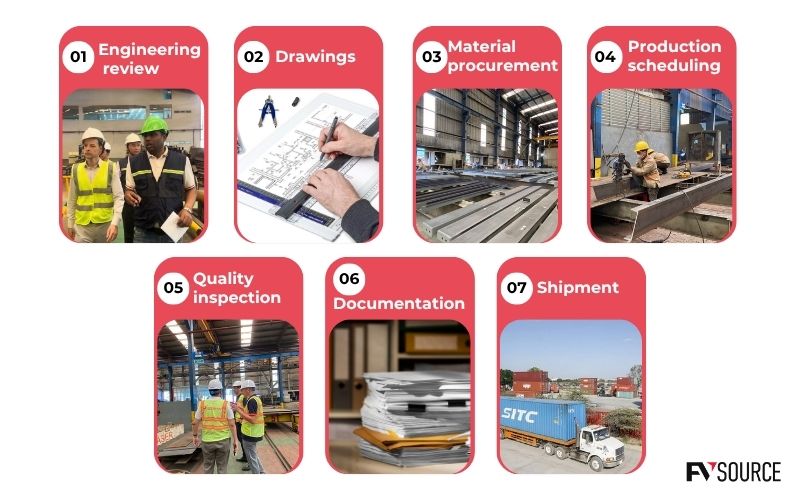
Before moving into production, responsibilities should be clearly assigned across the chain:
Engineering review → Drawings → Material procurement → Production scheduling → Quality inspection → Documentation → Shipment
Clear ownership across these stages helps reduce gaps between engineering, fabrication, quality control, and delivery.
Conclusion
Vietnam’s growing steel industry is creating more sourcing opportunities for foreign buyers, but the availability of factories does not guarantee project suitability. For structural steel and fabricated components, the more important question is whether a fabricator can consistently meet the project’s technical specifications, quality criteria, production scope, and delivery expectations.
A reliable evaluation should begin with a clear technical brief, followed by verification of fabrication equipment, welding processes, certifications, quality systems, material traceability, and usable production capacity. Buyers should also assess material availability, subcontracting, engineering support, and project management before making a final decision.
Ultimately, the strongest Vietnamese steel fabricator is not necessarily the one with the largest workshop or lowest quotation. It is the supplier whose technical competence, certifications, production throughput, quality systems, and execution resources align with the project’s actual specifications. This is what turns Vietnam steel sourcing from a search for the lowest-cost supplier into a more reliable, project-based sourcing decision.

