
Textile Manufacturing in Vietnam: Why Global Buyers Continue to Shift Production
- May 7, 2026
- Posted by: marketing
- Category: Manufacturing
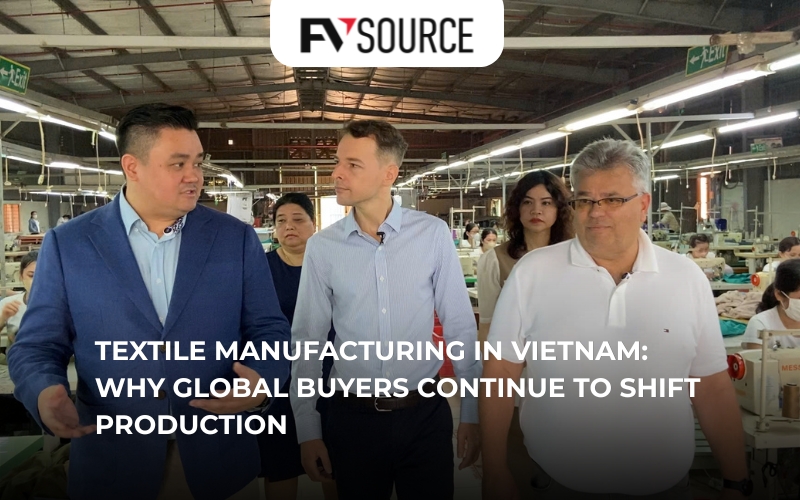
Discover why textile manufacturing in Vietnam continues to attract global buyers through strong capabilities, export growth, and evolving sustainability standards.
Vietnam’s Rise as a Global Textile Manufacturing Hub
Over the past two decades, Vietnam has transformed itself into one of the world’s leading textile and garment manufacturing hubs. Today, the country plays a central role in global apparel supply chains, supplying major international brands across Europe, North America, Japan, and South Korea.
This growth has been driven by a combination of competitive labor costs, strong industrial capabilities, and a rapidly expanding manufacturing ecosystem. As companies continue to diversify production outside China, Vietnam has positioned itself as one of the most strategic destinations for textile sourcing in Asia.
Far beyond simple garment assembly, Vietnam is now developing stronger capabilities in fabric production, technical textiles, OEM and ODM manufacturing, and vertically integrated supply chains. This evolution is allowing the country to move up the value chain and compete more directly with larger manufacturing markets.
Why Vietnam Has Become a Preferred Textile Manufacturing Destination
Vietnam’s success in textile manufacturing is closely tied to broader global supply chain transformations. Rising production costs in China, geopolitical uncertainty, and the need for supplier diversification have encouraged international buyers to explore alternative manufacturing hubs.
Vietnam has emerged as one of the strongest beneficiaries of this shift.One of the country’s key advantages remains its competitive labor structure. According to the General Statistics Office of Vietnam in Hanoi, the average monthly income of manufacturing workers in Vietnam remained significantly lower than in coastal manufacturing regions of China throughout 2024, while productivity levels in export-oriented factories continued to improve.
At the same time, Vietnam benefits from a young and increasingly skilled workforce. Over the years, local manufacturers have accumulated significant expertise in apparel construction, pattern development, quality management, and export operations. This experience allows factories to handle increasingly sophisticated production requirements.
Another major advantage lies in Vietnam’s extensive network of trade agreements. Agreements such as the European Union–Vietnam Free Trade Agreement (EVFTA), which officially entered into force in August 2020, and the Comprehensive and Progressive Agreement for Trans-Pacific Partnership (CPTPP), implemented in Vietnam in January 2019, provide preferential access to major export markets and strengthen the competitiveness of Vietnamese textile products internationally.
According to projections released by the Vietnam Textile and Apparel Association (VITAS) in Hanoi in March 2026, Vietnam’s textile and garment industry is targeting between 49 and 49.5 billion USD in export turnover for 2026, following an estimated 46 billion USD achieved in 2025. Industry leaders expect growth to be driven by supply chain diversification, expanding OEM and ODM capabilities, and increasing demand from the United States and European markets.
The Strength of Vietnam’s Textile Manufacturing Ecosystem
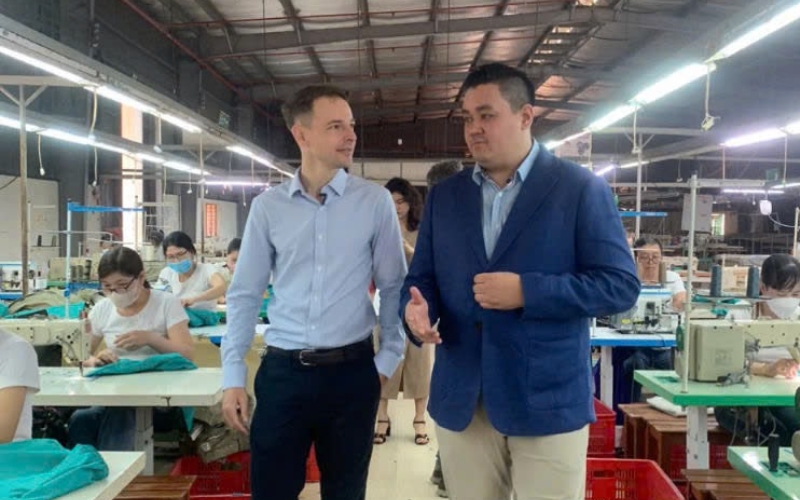
One of the reasons international buyers continue to increase sourcing in Vietnam is the development of a more complete industrial ecosystem.
In the past, Vietnam was primarily associated with cut-and-sew operations. While garment assembly remains a core strength, the industry has evolved considerably. Today, many manufacturers offer broader services that include material sourcing, product development, pattern making, sampling, printing, embroidery, and packaging.
This evolution toward OEM and ODM manufacturing is particularly important. Instead of simply executing production orders, many Vietnamese suppliers are now able to participate more actively in product development and manufacturing optimization.
The ecosystem itself has also expanded geographically. Major textile manufacturing clusters can now be found across both northern and southern Vietnam, including Ho Chi Minh City, Binh Duong, Dong Nai, Nam Dinh, Thai Binh, and Hai Phong. These regions benefit from strong logistics infrastructure and direct access to deep-water ports supporting export operations to Europe and North America.
Vietnam’s supplier network also continues to diversify across different product categories. Manufacturers produce a wide range of apparel, including sportswear, casualwear, workwear, fashion garments, uniforms, knitwear, outdoor apparel, and increasingly technical textile products.
According to the Ministry of Industry and Trade of Vietnam in Hanoi, the country counted more than 7,000 textile and garment companies operating nationwide as of late 2025, employing over 3 million workers across the sector.
Fabric Production and Vertical Integration
One of the historical challenges for Vietnam’s textile industry has been its dependence on imported fabrics and raw materials. While the country developed strong garment manufacturing capabilities early on, upstream textile production remained more limited.
This is gradually changing. Vietnam is increasingly investing in fabric mills, dyeing facilities, and textile processing capabilities. This vertical integration is becoming strategically important as buyers seek greater supply chain transparency and shorter lead times.
For many international brands, sourcing from vertically integrated suppliers reduces operational complexity and improves production control. It also helps manufacturers comply with rules of origin requirements under free trade agreements.
At the same time, investment in textile infrastructure continues to grow. According to the Foreign Investment Agency under Vietnam’s Ministry of Planning and Investment in Hanoi and CEICData (Vietnam Customs) Foreign Direct Investment data for Textiles and Garments was reported at 2.044 USD billion in Mar 2026, with major investments coming from South Korea, Taiwan, Hong Kong, and mainland China.
This investment flow has accelerated the development of higher value-added textile production capabilities within Vietnam, particularly in fabric manufacturing and dyeing technologies.
Sustainability Is Becoming a Major Industry Priority
Sustainability has become one of the most important trends shaping textile manufacturing globally, and Vietnam is no exception.
International buyers are increasingly demanding greater transparency regarding environmental impact, labor conditions, and material traceability. In response, many Vietnamese manufacturers are investing heavily in sustainability initiatives.
This includes wastewater treatment systems, energy-efficient machinery, rooftop solar installations, recycled materials, and compliance with international certifications such as OEKO-TEX, Global Recycled Standard (GRS), and Higg Index standards.
According to McKinsey & Company’s “The State of Fashion 2025” report published in December 2024, sustainability and traceability requirements are becoming defining criteria in supplier selection for international fashion brands.
Factories are also investing in automation technologies to improve efficiency and reduce waste. Automated cutting systems, digital pattern software, ERP-integrated production monitoring, and AI-assisted quality control technologies are becoming increasingly common, particularly among export-oriented manufacturers serving premium international markets.
This transition reflects a broader shift within Vietnam’s textile industry toward higher operational standards and long-term competitiveness.
Compliance and Quality Expectations Continue to Rise
As Vietnam strengthens its role in global supply chains, compliance requirements are also becoming more demanding.
International buyers increasingly expect suppliers to meet strict standards related to social responsibility, quality management, chemical usage, and labor practices. Certifications and factory audits have therefore become standard components of sourcing operations.
Vietnamese manufacturers that are able to consistently meet these expectations gain a significant competitive advantage. Many factories now operate according to international quality systems such as ISO 9001 and WRAP certification standards, while regularly undergoing third-party compliance audits for global apparel brands.
For sourcing professionals, supplier evaluation remains critical. Production capabilities can vary significantly between factories, making on-the-ground validation an essential step before entering long-term partnerships.
According to Better Work Vietnam, a joint initiative of the International Labour Organization (ILO) and the International Finance Corporation (IFC) headquartered in Hanoi, compliance expectations from global buyers increased significantly between 2022 and 2025, particularly regarding environmental transparency and labor standards.
A Brief Look at SaigonTex, one of the leading fairs in Vietnam for textile :
While the industry itself remains the primary driver of Vietnam’s textile growth, trade exhibitions such as SaigonTex continue to play a role in connecting international buyers with suppliers and manufacturers.
Held annually in Ho Chi Minh City, the exhibition gathers textile machinery producers, fabric suppliers, garment manufacturers, and sourcing professionals from across Asia. The 2026 edition highlighted growing interest in automation, sustainable textiles, and vertical integration strategies within Vietnam’s manufacturing sector.
However, the real strength of the industry lies beyond the exhibition halls, within the country’s expanding network of factories, textile mills, and export-oriented manufacturers.
Vietnam’s Textile Industry Continues to Move Up the Value Chain
Vietnam is no longer simply a low-cost garment manufacturing destination. The country has developed into a sophisticated textile manufacturing hub capable of supporting increasingly complex global sourcing strategies.
Its combination of competitive production costs, skilled labor, expanding vertical integration, and improving sustainability standards makes Vietnam one of the most attractive sourcing destinations in Asia today.
As international buyers continue to prioritize supply chain diversification and operational resilience, Vietnam’s textile industry is likely to strengthen its position even further in the years ahead.
For companies seeking long-term manufacturing partners, understanding the capabilities and evolution of Vietnam’s textile ecosystem is becoming increasingly important in shaping successful sourcing strategies.

