
Finding Distributors in Vietnam Through Trade Missions and Business Delegations
- July 28, 2026
- Posted by: marketing
- Category: Uncategorized
Expanding into Vietnam offers significant commercial opportunities, but finding the right distribution partner is often more challenging than identifying market demand. As Vietnam’s consumer market continues to grow and international brands increase their presence in Southeast Asia, selecting capable local distributors has become a critical factor in successful market entry.
Unlike manufacturing projects, where supplier capabilities can often be verified through technical assessments and factory audits, distribution success depends on commercial reach, logistics capability, regulatory compliance, and long-term market relationships. A distributor with extensive warehouse capacity may have limited retail coverage, while another with strong sales channels may lack the operational infrastructure required for certain product categories.
A business delegation provides a structured approach to identifying and evaluating potential distribution partners through a targeted business trip. Rather than relying on unsolicited enquiries or public business directories, companies can leverage trusted commercial networks to meet qualified distributors whose capabilities align with their products, target customers, and growth objectives.
This article explains how foreign companies can use business trade delegation services to identify distribution partners in Vietnam, establish appropriate evaluation criteria, and reduce commercial risks before entering long-term distribution agreements.
Understanding Vietnam’s Distribution Landscape
Vietnam’s growing economy and expanding middle class continue to attract international consumer brands, industrial suppliers, and technology companies. Rising household income, urbanisation, and increasing demand for imported products have created opportunities across sectors including food and beverage, cosmetics, healthcare, consumer goods, industrial equipment, and professional services.
However, Vietnam’s distribution landscape remains highly diverse.
One important distinction is the difference between Modern Trade (MT) and General Trade (GT).
Modern Trade includes supermarkets, hypermarkets, convenience store chains, specialty retail chains, and organised retail groups operating primarily in urban centres. These channels generally require structured procurement processes, product registration, consistent supply capability, and professional account management.
General Trade consists of traditional wholesalers, independent retailers, family-owned stores, and regional distributors. Although this channel is less centralised, it continues to represent a significant share of retail sales across many provinces, particularly outside major cities.
For many international brands, nationwide market coverage requires distributors capable of serving both channels or coordinating multiple distribution networks.
Understanding how distributors operate within these different channels is often more valuable than simply identifying companies with large sales volumes. The right partner depends on the product category, target customers, pricing strategy, and long-term commercial objectives.
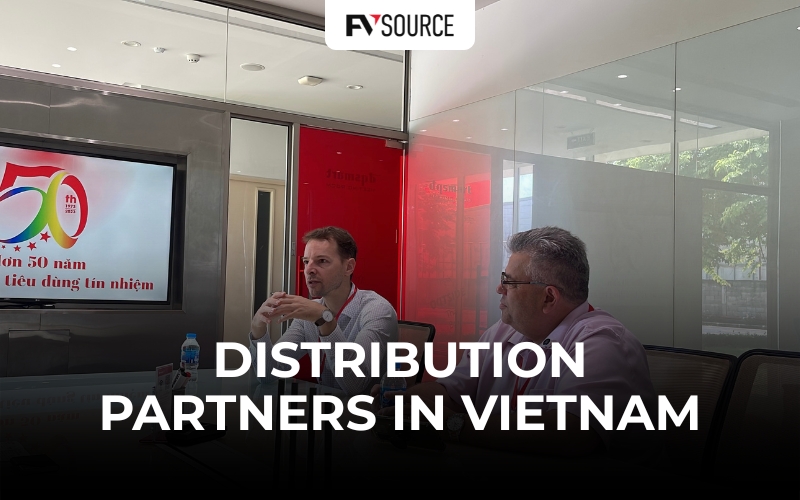
As an example of how trade missions are designed and implemented on the ground, this video explains how FVSource supported a delegation of European companies seeking to identify trade and distribution partners in Vietnam.
Why Business Trade Missions Creates Better Market Entry Opportunities
Many companies begin searching for distributors through online research, trade directories, or unsolicited enquiries. While these approaches may generate a long list of potential contacts, they rarely provide enough information to assess commercial capability or strategic fit.
When supported by proper partner identification, qualification, and pre-sales preparation, business trade missions offer a more structured approach.
Instead of searching the market independently, companies are introduced to pre-selected business partners through trade promotion initiatives, chambers of commerce, industry associations, professional advisers, or specialised consulting firms.
This approach offers several advantages :
- First, it reduces the time required to identify relevant distributors by narrowing the search to companies that already meet predefined business criteria.
- Second, it improves the quality of initial discussions. Rather than spending time introducing products to companies with little market relevance, buyers can focus on distributors that already possess appropriate industry experience, customer networks, or geographical coverage.
- Finally, face-to-face business meeting creates opportunities for comprehensive discussions that allow both parties to evaluate commercial expectations before investing significant resources in due diligence or contract negotiations.
Although a trade mission does not guarantee a successful partnership, it significantly improves the efficiency and quality of the distributor selection process.
Defining Distributor Selection Criteria Before the Trade Mission
Successful business trade mission begins long before the first meeting.
Companies should first define the characteristics of an ideal distribution partner based on their commercial objectives rather than attempting to evaluate every opportunity that becomes available.
Geographic coverage should also match business objectives. A nationwide distributor is not always the best choice. For companies testing market demand, a regional distributor with strong local relationships may provide better market knowledge and more focused customer support.
Operational capability is equally important. Buyers should evaluate warehouse capacity, transportation networks, inventory management systems, product handling procedures, and order fulfilment capability. Products requiring temperature-controlled logistics, hazardous material handling, or specialised storage require distributors with appropriate infrastructure and regulatory compliance.
Technology also plays an increasingly important role. Modern distributors typically operate Warehouse Management Systems (WMS), inventory tracking platforms, and digital reporting tools that improve inventory visibility, forecasting accuracy, and operational efficiency. Understanding how these systems integrate with the buyer’s own supply chain can reduce operational risk after market entry.
Beyond logistics capability, buyers should assess commercial performance indicators such as sales force size, customer portfolio, financial stability, after-sales service capability, and experience representing international brands.
Establishing these evaluation criteria before business matchmaking ensures that meetings focus on commercially relevant opportunities rather than general introductions.
Using High-Quality Matchmaking Channels
Not all business networking platforms produce the same quality of commercial introductions. Companies should prioritise organisations with established industry credibility and strong local business networks.
Government trade promotion agencies remain an important starting point. Organisations such as European-American Market Department regularly organise trade missions, B2B meetings, and industry-specific matchmaking programmes that connect international companies with Vietnamese importers and distributors.
Bilateral chambers of commerce including EuroCham, Nordcham, DBAV, CCIFV and other international business associations, also provide valuable networking opportunities. Their members often include experienced distributors, importers, logistics providers, retailers, and professional service firms familiar with international business practices.
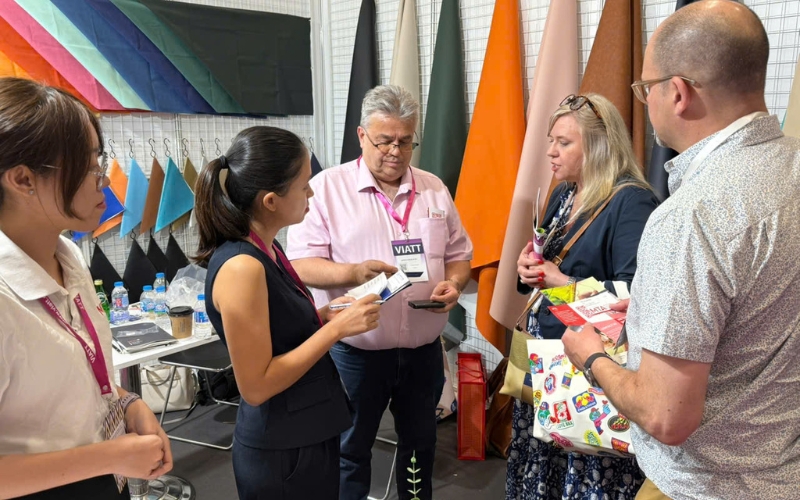
Industry exhibitions offer another effective channel for identifying distribution partners. Trade fairs such as Global Sourcing Fair, VIATT and other sector-specific exhibitions enable companies to meet multiple distributors within a short period while observing market trends, competing products, and customer demand.
For companies entering regulated industries or making significant long-term investments, working with specialised market-entry consultants or sourcing advisory firms can provide additional value. These organisations support distributor identification, preliminary due diligence, commercial introductions, regulatory guidance, and market entry planning. Their local market knowledge can help foreign companies evaluate potential partners more efficiently while reducing the time and risks associated with independent partner searches.
Examples include firms such as MoveToAsia, FVSource, Sourcing Agent Vietnam and other Vietnam-focused sourcing and market-entry consultancies that specialise in connecting international companies with qualified manufacturers, distributors, and commercial partners.
Unlike online communication, face-to-face meetings allow buyers to present products directly, receive immediate market feedback, and quickly determine whether further commercial discussions are worthwhile.
For companies entering regulated industries or making significant long-term investments, working with local market-entry consultants or commercial advisory firms may provide additional value. These organisations can support distributor identification, conduct preliminary background checks, facilitate commercial introductions, and coordinate the due diligence process before formal negotiations begin.
Conducting Distributor Due Diligence
Business trade mission helps identify promising distributors, but introductions alone are not sufficient for long-term commercial success. Before granting distribution rights, companies should conduct a structured due diligence process to verify whether a potential partner can deliver the operational, commercial, and regulatory capabilities required for the business.
A site visit is often one of the most effective forms of verification.
Visiting a distributor’s offices, warehouses, and logistics facilities allows buyers to confirm that the infrastructure presented during meetings accurately reflects day-to-day operations. Companies can evaluate warehouse conditions, inventory management practices, product handling procedures, transportation capability, and overall operational organisation.
For products requiring specialised storage, such as food, cosmetics, pharmaceuticals, or temperature-sensitive goods, buyers should also assess cold-chain capability, product traceability, and quality control procedures throughout the distribution process.
Commercial capability should be evaluated alongside operational performance.
Important considerations include the distributor’s customer portfolio, existing supplier relationships, sales organisation, geographic coverage, after-sales support, and experience working with international brands. Financial stability and business continuity planning should also be reviewed, particularly when the partnership is expected to support long-term market expansion.
Legal and regulatory compliance is equally important.
Foreign companies should verify that prospective distributors hold the licences required for importing and distributing regulated products. Depending on the industry, this may include import permits, product registration, industry-specific certifications, or other regulatory approvals issued by the relevant Vietnamese authorities.
Rather than relying solely on presentations or self-reported information, combining document reviews with on-site verification provides a more complete assessment of the distributor’s capabilities.
Protecting Intellectual Property Before Market Entry
Protecting intellectual property should be addressed before commercial operations begin rather than after products enter the market.
Foreign companies should ensure that trademarks, logos, and other intellectual property are properly registered in Vietnam before sharing detailed product information, technical documentation, or marketing materials with potential partners.
Confidential business information should also be protected through appropriate legal agreements, including non-disclosure agreements (NDAs) where necessary.
Clear contractual arrangements regarding brand ownership, marketing rights, pricing policies, and the use of intellectual property help reduce misunderstandings and protect long-term commercial interests as the business expands.
Structuring Distribution Agreements

Selecting a distributor does not necessarily require an immediate long-term commitment.
Many international companies reduce commercial risk by introducing new partnerships through phased distribution agreements.
Instead of granting exclusive nationwide rights from the beginning, companies may first appoint a distributor for a specific region, customer segment, or product category. This allows both parties to validate operational performance before expanding the scope of the partnership.
Pilot agreements typically include clearly defined performance indicators, such as sales targets, customer acquisition, inventory management, marketing activities, service quality, and reporting requirements.
Regular performance reviews during the pilot period enable both parties to identify operational challenges, refine commercial processes, and determine whether a broader partnership is appropriate.
This phased approach allows businesses to build confidence gradually while reducing the risks associated with entering a new market.
Building Long-Term Distribution Partnerships
Successful distribution is built on more than contractual agreements.
Once a distributor has been appointed, ongoing communication and performance management become essential to sustaining market growth.
Foreign brands should provide distributors with regular product training, updated marketing materials, sales support, and technical guidance to help local teams represent the brand effectively. At the same time, distributors should provide continuous feedback on customer preferences, competitive activity, pricing trends, and regulatory developments.
Regular business reviews create opportunities to evaluate sales performance, identify operational improvements, and align future commercial objectives.
Rather than viewing distributors as transactional sales channels, companies that invest in long-term partnerships are often better positioned to strengthen market presence, improve customer relationships, and respond more effectively to changing market conditions.
Conclusion
Finding the right distribution partner is one of the most important decisions foreign companies make when entering the Vietnamese market.
Business trade delegation provides a structured and efficient way to identify qualified distributors through trusted commercial networks, reducing the time and uncertainty involved in partner selection.
However, successful market entry depends on more than making introductions. Companies should define clear distributor selection criteria, conduct thorough due diligence, verify operational capabilities, protect intellectual property, and establish distribution agreements that allow partnerships to develop progressively.
Vietnam’s distribution market offers significant opportunities across a wide range of industries. Companies that combine structured business matchmaking with disciplined distributor evaluation and long-term relationship management will be better positioned to build sustainable commercial partnerships and achieve lasting growth in one of Southeast Asia’s most dynamic markets.

