
Steel Fabrication in Vietnam: How Engineering Improves Production Efficiency
- October 22, 2026
- Posted by: marketing
- Categories: Manufacturing, Uncategorized
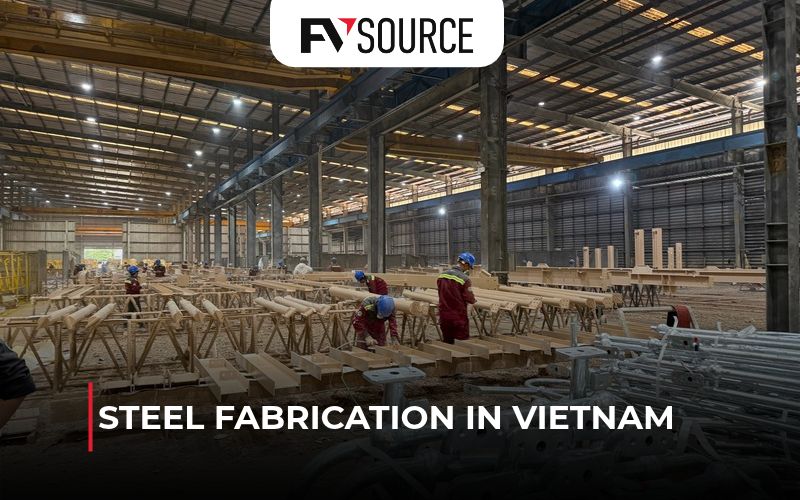
Production efficiency in steel fabrication is often measured through equipment utilization, welding productivity, and the volume of components a factory can deliver. Yet some of the most consequential decisions affecting manufacturing performance are made before production begins.
For steel fabrication facilities in Vietnam, engineering plays a central role in turning structural requirements into components that can be manufactured using available equipment, processes, and technical capabilities. A design may meet its structural requirements while still creating unnecessary difficulties during cutting, assembly, welding, or inspection.
This distinction matters to manufacturers seeking better cost control and to international buyers assessing the technical capabilities of their production partners. Understanding how engineering decisions influence manufacturing outcomes can help both sides identify potential problems earlier, improve production planning, and reduce avoidable costs.
The Role of Engineering in Steel Fabrication
Structural steel manufacturing involves a series of interconnected activities, from design and detailing to material preparation, cutting, drilling, welding, assembly, and surface treatment. While these operations take place at different stages, the decisions made during engineering determine much of the work required on the production floor.
An important distinction exists between structural design and fabrication detailing. Structural design establishes how a steel structure should perform, including its load-bearing capacity, stability, and overall configuration. Fabrication detailing translates those requirements into the dimensions, connections, material specifications, and assembly information needed to manufacture individual components.
A structural drawing may indicate how two beams should be connected, for example, but the fabrication team needs considerably more information. The connection may require specific plate dimensions, bolt-hole positions, weld details, and instructions that determine how the components fit together.
These details are not simply administrative requirements. They influence how efficiently the factory can execute the work.
When Engineering Drawings Meet Factory Capabilities
A technically sound design is not necessarily easy to manufacture. Its feasibility depends partly on the equipment and processes available at the selected fabrication facility.
Consider a large welded steel assembly developed by an overseas engineering company. The design may be structurally acceptable, but the finished component could exceed the factory’s handling capacity or the dimensions supported by its cutting and machining equipment.
The manufacturer would then need to determine whether the component can be fabricated in sections, whether additional handling arrangements are necessary, or whether an alternative production method should be proposed.
Each option carries different implications for manufacturing time, quality control, and project cost. Any design modifications affecting structural performance must also receive the appropriate engineering approval.
Similar constraints arise with welding access, component tolerances, and surface treatment. A design involving narrow spaces between structural members may be difficult to weld or inspect, even when the connection itself is technically acceptable.
The American Institute of Steel Construction (AISC) addresses these considerations through the concept of constructability. Its Design Guide 23 emphasizes the integration of structural design, detailing, fabrication, and installation requirements throughout project development.
For factories involved in steel fabrication in Vietnam, this relationship becomes particularly relevant when serving international projects. Some overseas customers provide complete engineering drawings and expect the manufacturer to produce components according to the approved specifications. Others require additional support with detailing or engineering development. Where the manufacturer participates in engineering, its production knowledge can help identify practical fabrication solutions. When the original drawings come from the customer, that same knowledge remains valuable during technical reviews and clarification.
These considerations are also reflected in a factory interview conducted by Guillaume Rondan, CEO of MoveToAsia. Speaking with the QA/QC Manager of a Vietnamese steel fabrication facility, the discussion explores how engineering teams review customer drawings, address manufacturing constraints, and coordinate technical requirements before production begins.
How Engineering Decisions Influence Production Efficiency
Engineering decisions affect production efficiency through several mechanisms. Some determine how much material is required, while others influence fabrication hours, equipment utilization, or the likelihood of corrective work. The effects are often interconnected. A design that reduces material consumption may increase welding requirements, while a more substantial structural member may simplify fabrication.
For this reason, manufacturers should consider the overall production implications of engineering decisions rather than optimizing individual components in isolation.
Material Utilization and Fabrication Costs
Material efficiency begins with the relationship between component design and the steel products available for manufacturing. Steel plates, beams, and sections are generally procured in standard dimensions. Fabricated components, however, often require cutting these materials into specific shapes and lengths.
When engineering dimensions are developed without considering available stock sizes, manufacturers may generate avoidable offcuts or require additional material preparation.
For example, the dimensions of connection plates can influence how many pieces can be cut from a standard steel plate. Similarly, repeated components with consistent dimensions may allow more efficient cutting arrangements than numerous variations requiring separate preparation.
However, minimizing steel consumption does not necessarily minimize production cost. A lighter structural member may need additional stiffeners, reinforcing plates, or more complicated connections to meet the required performance. These additions can increase cutting, fitting, welding, and inspection work.
SteelConstruction.info, a technical resource developed by the British Constructional Steelwork Association and Steel for Life, identifies this trade-off in structural steel cost planning. Its guidance explains that minimizing frame tonnage does not automatically produce the lowest overall cost because fabrication complexity can be an equally important cost driver.
For manufacturers, the relevant calculation is therefore broader than the purchase price of steel. It includes material consumption, processing requirements, labor, inspection, and potentially the cost of handling and transporting finished assemblies. Engineering teams that understand these relationships can assess alternative solutions based on their overall manufacturing implications rather than material weight alone.
Connection Design and Welding Complexity
Connection details are another important influence on steel fabrication efficiency. A structural connection may involve end plates, stiffeners, bolts, welds, and supporting components. Each additional element introduces work that must be prepared, positioned, assembled, and inspected. The effect becomes particularly noticeable when a project contains hundreds of similar connections.
Small differences in connection arrangements can change the number of fabrication operations required. For instance, using several different bolt diameters or hole patterns may involve additional drilling setups and tooling changes. Repeated connection details can make production preparation more consistent.
Technical guidance published by SteelConstruction.info identifies standardized fittings, rationalized hole sizes, and simpler cutting arrangements as ways to improve fabrication economy.
Welding introduces further considerations. A connection may provide adequate structural strength but leave limited room for welding equipment or inspection access. Depending on the joint configuration, the fabrication team may need additional positioning, specialized procedures, or a more demanding sequence of operations. Weld size and joint preparation also affect the amount of deposited material and the time required to complete a connection.
These requirements cannot be reduced arbitrarily. Weld specifications must satisfy the applicable structural design, welding standards, and approved procedures. The objective is to avoid unnecessary complexity while maintaining the required technical performance.
For a manufacturer quoting a structural steel project, understanding connection complexity is essential. Two assemblies with similar weights may require substantially different fabrication hours, particularly when one contains numerous detailed welded connections. This is why engineering review can influence quotation accuracy as well as production efficiency.
Assembly Sequencing and Welding Distortion
The order in which components are assembled and welded can affect both production time and dimensional accuracy.
Welding introduces localized heating and cooling, which can cause distortion in steel assemblies. If distortion is not adequately controlled, components may require straightening, additional inspection, or corrective work before they can proceed to subsequent operations.
The Welding Institute (TWI) identifies welding sequence, joint design, restraint, and welding procedures among the factors influencing distortion.
Consider a fabricated beam with several stiffeners and connection plates. Welding all attachments without considering heat distribution or assembly sequence may create dimensional problems that complicate later fabrication stages.
Depending on the approved welding procedure and component geometry, the manufacturer may use balanced welding sequences, suitable fixtures, or other distortion-control methods.
These decisions need to be considered during fabrication planning, particularly for assemblies with demanding dimensional requirements.
Engineering also influences how components are divided into assemblies and subassemblies. A large structure may be easier to manufacture as several manageable sections, but this approach can introduce additional joints, alignment requirements, and inspection activities. Producing fewer, larger assemblies may reduce some of those operations while increasing handling or transportation difficulties.
The appropriate solution depends on the factory’s equipment, the project’s installation requirements, and the technical constraints of the structure.
Evaluating these alternatives before production allows manufacturers to establish a more realistic fabrication sequence and avoid changes after work has begun.
Dimensional Tolerances and Rework
Dimensional requirements are necessary to ensure that fabricated steel components fit together and perform as intended. Problems arise when tolerances are unclear, inconsistent, or unnecessarily restrictive for the intended application.
A project may specify precise hole positions, connection geometry, or assembly dimensions. Achieving these requirements can involve additional measurement, preparation, and inspection operations.
Where tighter tolerances are technically necessary, manufacturers must plan accordingly. Where requirements are unnecessarily restrictive, they may create additional production effort without improving the finished structure’s performance.
The applicable standards and contractual specifications determine what tolerances are acceptable. Any proposed adjustments should be reviewed by the responsible engineering authority.
Drawing quality is equally important. An unclear connection detail or inconsistent dimension can interrupt production while the factory seeks clarification. If the problem is discovered after components have been cut or welded, the consequences may be more expensive.
For example, an incorrect bolt-hole arrangement could require modification of a fabricated component. Depending on the circumstances, this may affect material integrity, inspection requirements, or the ability to use the component at all.
Across a project with many interconnected assemblies, even a relatively small error can disrupt subsequent work. The commercial implications extend beyond the cost of correcting an individual part. Rework consumes production capacity that could otherwise be allocated to scheduled orders, while unresolved technical questions can interfere with workshop planning and delivery commitments.
Engineering therefore contributes to efficiency not only by improving how components are designed, but also by reducing uncertainty before and during fabrication.
Integrating Engineering with Factory Production
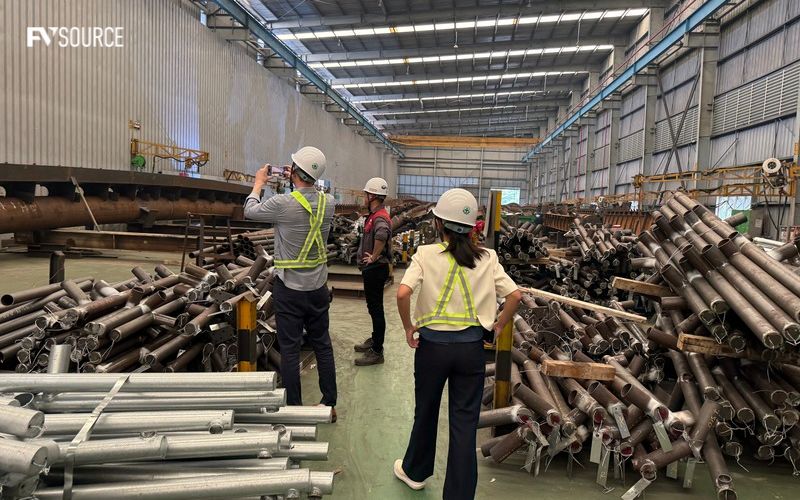
The benefits of engineering depend on how effectively technical decisions are transferred into manufacturing operations. A company may employ experienced engineers and operate capable equipment, yet still experience production difficulties if drawings, approvals, and workshop instructions are not properly coordinated.
One practical approach is to apply Design for Manufacturing (DFM) principles during project preparation. In structural steel fabrication, this means considering the available production processes and constraints while developing or reviewing component details.
It does not mean changing approved structural requirements simply to make fabrication easier. Rather, it provides a framework for identifying manufacturing constraints early and evaluating acceptable solutions with the appropriate technical authorities.
Technical Reviews Before Production
An engineering review should take place before fabrication drawings are released to the workshop. At this stage, engineering, production planning, and quality personnel can assess whether the available information is sufficient to manufacture the required components.
The review should establish whether material specifications are clear, equipment limitations have been considered, and the proposed fabrication methods are compatible with the required quality standards.
For a project involving complex welded assemblies, production personnel may identify practical difficulties that are not immediately apparent in the drawings. The engineering team can then evaluate possible solutions before materials are cut or components are assembled.
This is particularly useful when drawings have been prepared by an overseas engineering company unfamiliar with the manufacturer’s specific production setup.
A structured technical review does not guarantee that every problem will be eliminated. It does, however, create an opportunity to resolve foreseeable issues before they become manufacturing interruptions.
Managing Technical Clarifications and Design Approvals
When drawings contain missing information or requirements that cannot be executed as specified, manufacturers need a reliable method of obtaining clarification.
Requests for Information (RFIs) are commonly used to document such questions. An RFI might concern an unclear weld specification, a dimensional conflict, or a connection arrangement that requires additional engineering review. For international projects, the clarification process may involve the manufacturer’s engineering team, the customer’s design consultant, and project management personnel working across different countries.
Clear approval responsibilities are essential. The manufacturer needs to know who can provide technical clarification, who has the authority to approve design changes, and which documents represent the latest approved production requirements.
This distinction prevents informal communication from being mistaken for authorization to modify a structural component.
In the factory interview, the QA/QC Manager describes how customer drawings are reviewed through kick-off discussions and technical clarification before fabrication begins. This illustrates why engineering questions should be resolved through an agreed review and approval process rather than leaving workshop personnel to interpret incomplete instructions. Approved clarifications must then be reflected in the drawings and production documents used by the factory.
Turning Approved Drawings into Production Instructions
Once engineering information has been approved, it must be translated into practical instructions for the workshop. This involves more than distributing drawings. Production planners need to organize the sequence of work, allocate equipment, coordinate material availability, and identify the inspection activities required at different stages.
For example, cutting and drilling operations may be scheduled around component dimensions and equipment availability. Assembly teams need the correct drawings and identification details, while welding personnel require applicable procedures and technical specifications.
Quality control activities must also be coordinated with production. Some inspection points can be completed after fabrication, while others may need to occur before a joint becomes inaccessible or before subsequent operations begin.
If inspection requirements are not incorporated into production planning, completed work may need to be reopened, delayed, or subjected to additional verification.
An effective engineering-to-production workflow ensures that engineering, production, and quality teams work from consistent and approved information, reducing the risk of conflicting instructions and avoidable interruptions.
Controlling Engineering Changes During Fabrication
Even well-prepared projects can experience design changes after production has started. A customer may revise a connection detail, change a dimension, or request an adjustment to accommodate another part of the project. The challenge is ensuring that the updated requirement reaches every department affected by the change. If engineering releases a revised drawing but production continues using an earlier version, the factory may manufacture components that no longer match the approved design.
The consequences can extend to material procurement, fabrication scheduling, inspection records, and delivery preparation. Drawing revision control is therefore a practical manufacturing requirement, not merely a documentation exercise.
A controlled process should identify which drawing revision is approved, which components are affected, and whether work already completed must be reviewed. Where fabrication has already begun, engineering and production personnel need to assess the impact before further work proceeds.
Digital manufacturing systems can support this coordination by linking technical documentation, production planning, and revision records. However, software alone does not ensure reliable change management.
The factory still needs defined approval responsibilities, consistent documentation practices, and clear communication between engineering and workshop personnel.
For international buyers evaluating steel manufacturers in Vietnam, these processes provide useful insight into operational maturity. A factory’s ability to explain how it reviews drawings, manages technical questions, and controls design revisions can reveal more about project execution than machinery specifications alone.
Conclusion
Engineering is not simply a preliminary step in steel fabrication. It directly influences how efficiently a factory can use materials, organize production, maintain quality, and meet project requirements.
For steel manufacturers in Vietnam, integrating engineering knowledge with production capabilities can help improve cost control, reduce avoidable rework, and deliver more predictable manufacturing outcomes.
For international buyers, evaluating a factory’s engineering capabilities, technical review processes, and coordination between departments provides a more complete picture of its manufacturing readiness. Beyond equipment and production capacity, these capabilities can make a significant difference when selecting a reliable partner for technically demanding steel fabrication projects.

