
Manufacturing in Vietnam: How to Manage Risk Before Setting Up Your Own Factory
- October 19, 2026
- Posted by: marketing
- Categories: Manufacturing, Market Entry, Uncategorized
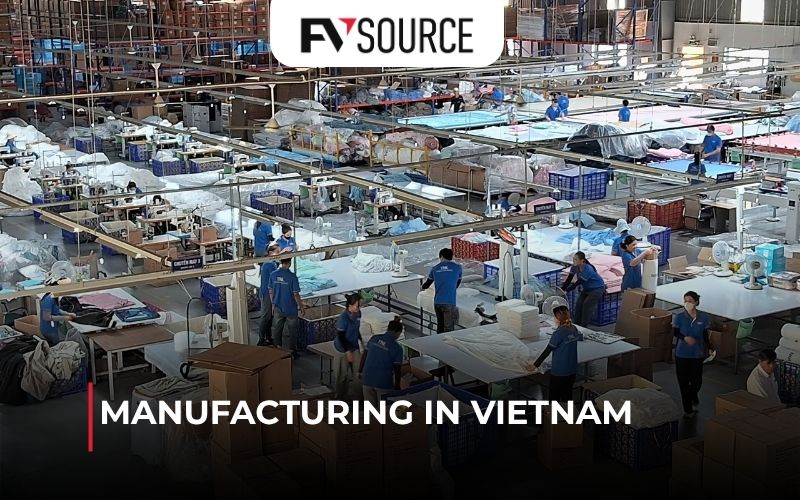
Vietnam continues to attract international manufacturers looking to diversify production, strengthen supply chains and establish a long-term presence in Southeast Asia. For companies considering a long-term presence in the country, setting up an owned factory can provide greater control over production processes, quality standards and manufacturing capacity.
However, establishing a factory is a substantial commitment. Beyond the initial investment in land, facilities and machinery, businesses must account for operating expenses, regulatory requirements, supplier availability and the practical challenges of managing production locally.
The main risk is not necessarily choosing the wrong factory or investing too much at the beginning. It is committing capital before confirming whether the business conditions support that investment. Before setting up a factory in Vietnam, foreign investors should assess several interconnected factors that will determine whether the project is commercially and operationally viable.
1. Key Risks to Consider Before Setting Up a Factory in Vietnam
A factory investment should be evaluated as a long-term business project rather than a standalone construction or equipment purchase. Several risks can affect its viability, and problems in one area can quickly create pressure elsewhere.
Market Demand and Production Capacity Risk
One of the first questions to address is whether there is enough predictable demand to justify owning a production facility.
Businesses sometimes estimate factory capacity based on expected sales growth, potential customer interest or projected market demand. These assumptions may not reflect actual purchasing commitments. If orders develop more slowly than expected, the company may end up operating below capacity while continuing to pay for labour, utilities, equipment maintenance and facility-related expenses.
This creates a direct financial problem. Fixed costs are spread across fewer units, increasing the cost of each product. Machinery may remain idle, while inventory and working capital become tied up in production that cannot be sold immediately.
Production capacity also needs to match the nature of the business. A manufacturer serving customers with seasonal demand or irregular orders may not benefit from the same facility structure as a company supplying components under recurring production contracts.
Before deciding on factory size, investors should distinguish between confirmed orders, recurring customer demand and potential future sales. The distinction matters because each provides a different level of confidence when estimating the production volume required to support an investment.
Location and Infrastructure Risk
Choosing an industrial location involves more than comparing land lease rates or the distance to a major city. A site that appears cost-effective may create additional expenses if its infrastructure does not match the factory’s production requirements.
For example, manufacturers with energy-intensive processes need to examine electricity availability, connection capacity and the reliability of supply. Businesses generating industrial wastewater must confirm whether the industrial park’s treatment infrastructure can accommodate their discharge volume and relevant treatment requirements.
Logistics also deserves close attention. Distance from suppliers, ports, customers and major transport routes can affect inbound material costs, delivery schedules and export operations. Vietnam’s infrastructure development has improved connectivity, but transport and energy constraints remain relevant considerations for certain locations and industries. The OECD has identified infrastructure and energy resilience as important areas for Vietnam’s continued industrial development.
Investors should also verify whether the intended manufacturing activity is compatible with the industrial park’s approved functions and land-use arrangements. Not every available factory or industrial plot is suitable for every production process.
The practical consideration is whether the location can support the factory’s actual operations, not simply whether the facility is available at an acceptable price.
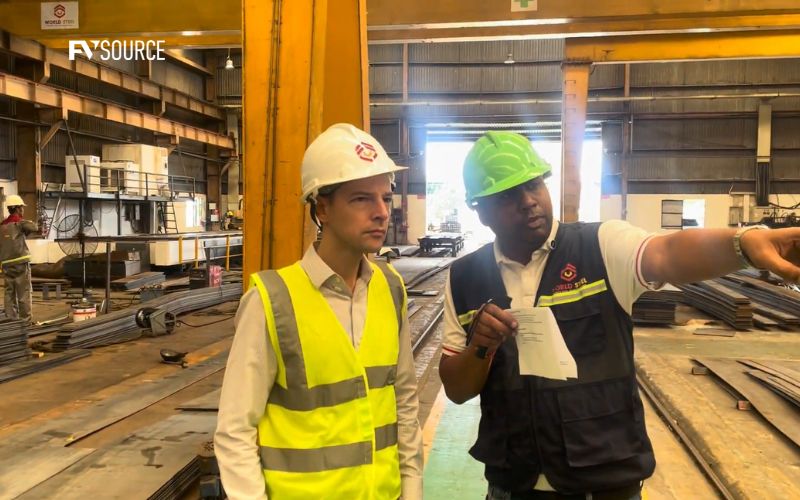
In this video, FVSource takes you behind the scenes of a real sourcing project for a German industrial company looking for an additional manufacturing partner in Vietnam. The project illustrates how factory qualification goes beyond comparing quotations, covering technical capabilities, production capacity, workshop conditions and quality management through structured supplier screening and on-site assessments.
Investment Costs and Financial Exposure
The initial cost of establishing a factory is only one part of the financial commitment. A realistic investment assessment must account for the expenses required to bring the facility into operation and maintain production over time.
Initial capital expenditure may include land-use or factory lease arrangements, construction or renovation, machinery, installation, utilities connections and supporting equipment. The exact requirements depend on whether the business leases a ready-built facility, renovates an existing factory or develops a new site.
Operating expenses begin to accumulate once the facility is running. These may include salaries, utilities, equipment maintenance, quality inspections, logistics, administration and compliance-related expenses.
Working capital is another important consideration. Manufacturers need sufficient liquidity to purchase raw materials, maintain inventory, pay employees and cover supplier payments before receiving money from customers. Longer payment terms or unexpected production delays can increase this requirement.
Cost estimates can also become inaccurate when they exclude equipment installation, commissioning, staff training or modifications needed to meet local technical and regulatory requirements. These expenses may not be obvious during the initial site selection stage.
For foreign investors, the financial assessment should therefore cover the entire investment cycle, from initial setup to the period when production reaches a commercially sustainable level. A project that appears affordable based on construction and machinery costs alone may place considerable pressure on cash flow once recurring expenses are included.
Regulatory and Compliance Risk
Regulatory requirements should be assessed before selecting a site or committing to construction. Delays in obtaining the necessary approvals, or discovering that a planned production activity does not meet applicable requirements, can affect the project’s implementation schedule and overall cost.
Foreign investors should first examine the applicable investment conditions and procedures for their proposed business activities. Vietnam’s Law on Investment No. 143/2025/QH15 took effect on March 1, 2026, replacing the previous Law on Investment framework, subject to its transitional provisions. The law addresses investment forms, market access conditions and procedures for implementing investment projects. The applicable requirements depend on the investor, business activity and project structure.
Other regulatory areas require separate consideration.
Land-use arrangements and industrial zoning must be compatible with the intended factory activities. Construction and technical requirements need to be assessed before building or modifying facilities. Depending on the project’s environmental classification, scale and potential emissions, the business may also need to prepare an environmental impact assessment (EIA), obtain an environmental licence or complete other applicable environmental procedures under Vietnam’s environmental protection framework.
Fire prevention and firefighting requirements are another essential consideration. Law No. 55/2024/QH15 on Fire Prevention, Firefighting, Rescue and Salvage took effect on July 1, 2025. Relevant design, construction, inspection and acceptance requirements should be checked against the factory’s specific characteristics before it is put into operation.
Labour and occupational safety obligations also need to be incorporated into the operating plan.
The important point is that compliance cannot be treated as a final administrative step after the facility has been selected or built. Regulatory requirements may influence the site’s suitability, facility design, equipment specifications and investment budget from the beginning.
Supply Chain and Workforce Risk
A factory’s production capacity depends on more than its own machinery and employees. It also relies on the availability of suitable materials, components, services and supporting suppliers.
For manufacturers entering Vietnam, local sourcing may not cover every input required for production. Certain specialised components, materials or production equipment may still need to be imported. This can expose the business to longer procurement lead times, international logistics costs, customs procedures and fluctuations in input prices.
Local suppliers also need to be assessed beyond their quoted prices. Their actual production capacity, quality management systems, technical capabilities, delivery performance and ability to meet customer specifications all affect the reliability of the supply chain.
Workforce availability presents a related challenge. The number of workers available in a particular industrial area does not necessarily indicate whether the business can recruit the technicians, engineers, supervisors and quality-control personnel it needs.
The World Bank has identified skills development as an important constraint on Vietnam’s ability to move towards higher-value participation in global value chains. This is particularly relevant for manufacturers requiring specialised technical capabilities rather than general production labour.
If a factory depends on specialised skills that are difficult to recruit locally, training costs and the time required to build an effective production team should be included in the investment assessment.
2. How to Assess Factory Investment Feasibility Before Committing Capital
Identifying potential risks is only the starting point. Before investing, businesses need to verify whether the assumptions behind their proposed factory are supported by actual market, operational and financial conditions.
Validate Market Demand and Production Requirements
Start by examining the company’s expected production requirements and the commercial commitments supporting them.
Potential customers, existing purchase orders, historical sales and realistic demand forecasts provide different levels of evidence. Businesses should assess these separately rather than treating all projected sales as guaranteed demand.
The next step is to translate demand into production requirements. This includes estimating output volumes, product variations, production schedules, equipment utilisation and the capacity needed to handle fluctuations in orders.
For example, a business expecting several customers to place recurring orders should examine whether their combined volumes can support the proposed facility throughout the year. If demand is concentrated in a few months, the company must also consider how it will manage capacity and fixed expenses during slower periods.
The objective is to establish a defensible production plan before determining how much manufacturing capacity to invest in.
Conduct Local Operational and Regulatory Due Diligence
Once the production requirements are understood, investors can evaluate whether the proposed location and local business environment can support them.
This involves comparing shortlisted industrial parks or existing factory facilities against specific operational needs. Site visits should cover utility availability, transport access, wastewater treatment arrangements, building conditions and compatibility with the intended manufacturing activity.
Beyond the initial site assessment, investors should verify the actual capabilities of potential local suppliers and manufacturing partners. This may include:
- Reviewing actual production capacity against the required output and delivery schedule.
- Assessing quality management systems and relevant technical certifications.
- Checking production equipment, manufacturing processes and technical capabilities.
- Reviewing previous delivery performance and experience with comparable products or specifications.
- Verifying whether suppliers can maintain consistent quality and production standards as volumes increase.
A supplier’s ability to provide a competitive quotation does not, by itself, demonstrate that it can support long-term production. Where appropriate, factory visits, technical assessments and sample evaluations can provide additional evidence of operational capability.
Supplier verification should take place at the same stage. Businesses can request technical documentation, review relevant certifications, inspect production facilities where appropriate and assess suppliers against defined quality and delivery requirements. A supplier’s ability to provide a competitive quotation does not, by itself, demonstrate that it can support long-term production.
Workforce assessment should also move beyond general labour availability. Investors need to identify the positions that require specialised experience, estimate recruitment and training requirements, and determine whether the local labour market can support the planned production schedule.
Finally, the project should undergo a regulatory review based on its actual investment structure, location and manufacturing processes. Qualified local legal, environmental and technical advisers can help identify applicable procedures and potential constraints before major commitments are made.
This stage is particularly important because a site may be commercially attractive but unsuitable once its regulatory or technical limitations are examined.
Assess Total Investment Costs and Financial Viability
After validating demand and local operating conditions, businesses can develop a more reliable financial model.
The assessment should include initial investment, recurring operating expenses, working capital and the costs of reaching stable production. It should also account for potential delays in construction, equipment installation, recruitment and regulatory approvals.
Rather than relying on a single forecast, investors should test different scenarios. A base-case scenario can reflect expected operating conditions, while a downside scenario can examine the financial consequences of lower order volumes, higher input costs or delayed production.
Break-even analysis is particularly useful. It helps determine the production volume required to cover fixed and variable costs, showing whether the planned factory can remain financially viable under realistic demand conditions.
Businesses should also establish clear investment criteria before proceeding. These may include minimum confirmed demand, acceptable setup costs, verified site suitability, sufficient working capital and the completion of relevant regulatory checks.
If these conditions are not met, postponing the investment or reassessing the project structure may be more appropriate than committing additional capital to an uncertain plan.
3. Choosing the Right Manufacturing Structure Before Owning a Factory
A dedicated factory is not the only way to establish manufacturing operations in Vietnam. Depending on the company’s production requirements, financial resources and level of local experience, other arrangements may provide a more appropriate starting point.
Consider Lower-Commitment Manufacturing Options
Contract manufacturing allows a business to work with an established manufacturer that already has production facilities, equipment and employees. This can reduce the need for upfront investment, although the company still needs to manage supplier selection, quality requirements, production oversight and contractual responsibilities.
Outsourcing specific production processes is another option. Instead of transferring the entire manufacturing operation to one external partner, a company can assign selected production stages to qualified local suppliers. This may be useful when certain processes are available locally but the business wants to retain control over other parts of production.
Partnering with an existing manufacturer can also provide access to local production capabilities and operational experience. However, responsibilities for investment, quality, intellectual property and decision-making should be clearly defined.
Leasing an existing factory is different from outsourcing. It gives the business greater direct control over its own operations while potentially avoiding the time and capital required to develop a new facility. The company must still evaluate the building’s condition, permitted use, infrastructure, lease terms and compliance requirements.
These alternatives do not eliminate risk. They change where the investment, operational responsibilities and exposure sit.
When Is Factory Ownership Justified?
Owning a factory becomes more reasonable when a business has a clear and sustained need for dedicated production capacity.
This may be the case when order volumes are sufficiently predictable, manufacturing processes require specialised equipment or close technical control, and long-term customer commitments support the investment. Ownership may also be relevant when protecting proprietary processes or maintaining consistent production standards is difficult through external suppliers.
However, the business must also have the financial resources and local management capabilities to operate the facility. Factory ownership requires more than securing a suitable site and purchasing machinery. It involves managing employees, suppliers, production schedules, compliance and ongoing operational performance.
For companies without sufficient demand or local operating experience, contract manufacturing or another lower-commitment arrangement may provide an opportunity to understand the Vietnamese manufacturing environment before making a larger investment.
The decision should ultimately depend on what the business needs to control, how much production capacity it can realistically utilize and whether the expected benefits justify the long-term financial commitment.
Conclusion
Setting up a factory in Vietnam requires more than securing a suitable location and estimating construction costs. Businesses need to assess market demand, production requirements, local infrastructure, supplier capabilities, workforce availability and regulatory obligations before committing capital.
For foreign investors, understanding the local manufacturing environment is essential to making informed investment decisions. This includes verifying potential manufacturing partners, assessing production capabilities and evaluating the operational conditions that will support long-term production.
Factory ownership may be the right choice when production volumes, technical requirements and financial resources justify a dedicated facility. For businesses still developing their operations in Vietnam, contract manufacturing or other flexible arrangements can provide a more gradual approach.
The objective is not simply to establish a factory, but to build a manufacturing operation that is commercially viable and sustainable over the long term.

