
Beyond China+1: How European Companies Can Build a More Resilient Manufacturing Strategy in Asia
- November 2, 2026
- Posted by: marketing
- Category: Manufacturing
China has long been a key manufacturing base for European companies. Its scale, mature industrial networks and broad manufacturing capabilities have made it a natural starting point for outsourcing projects in Asia.
But the manufacturing landscape is changing. Vietnam, Thailand, Malaysia and other Asian markets have developed specialised manufacturing capabilities and increasingly mature industrial ecosystems. For European companies looking to diversify their supply chains, the question is no longer simply where to find an alternative to China.
It is about understanding which manufacturing environment is the right fit for specific supply chain and production requirements.
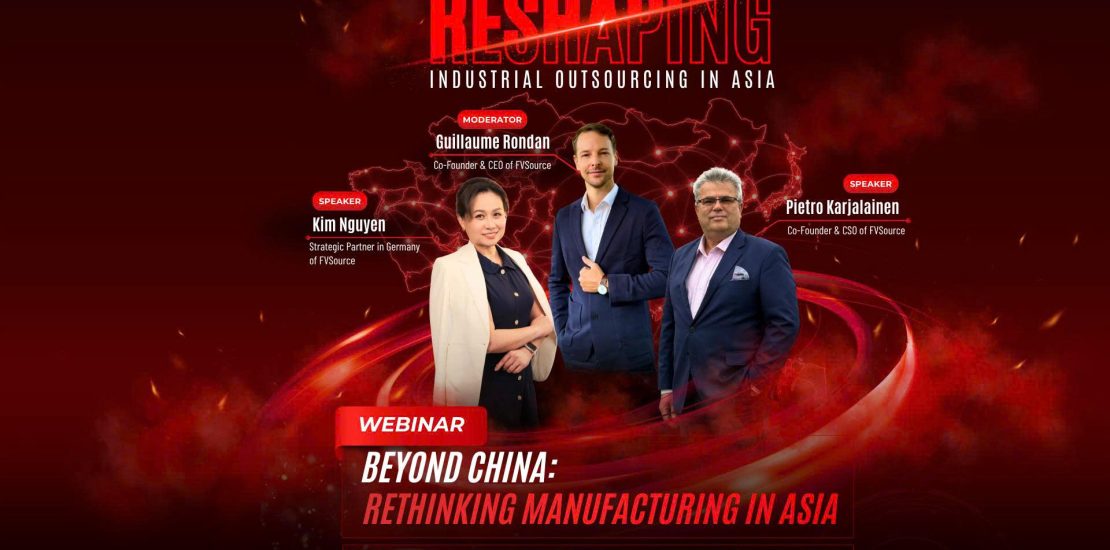
This was one of the central themes discussed during FVSource’s September 2026 webinar, “Beyond China+1: Rethinking Manufacturing in Asia,” which brought together European and Asian perspectives on manufacturing diversification, supplier selection and long-term production strategies.
The Right Country Starts With the Right Supply Chain Requirement
When companies evaluate manufacturing opportunities in Asia, the discussion often starts with countries, costs or individual suppliers.
In practice, the starting point should be the production and supply chain requirement: What are the technical specifications? What production volume is required? Which processes need to be performed in-house, and which can be subcontracted? What quality standards and certifications apply? How important are tooling, machining, surface treatment, assembly or other secondary processes?
Then come the broader supply chain considerations: raw materials, subcontractors, logistics, lead times, quality control and the ability to manage production from Europe.
Only after these factors are understood does it become possible to assess which market and industrial ecosystem make sense.
A company producing precision-machined components, for example, will have very different requirements from a manufacturer of finished consumer products. The relevant machinery, engineering capabilities, subcontractor network and industrial cluster can be completely different.
This is why evaluating manufacturing markets based primarily on labour costs can provide an incomplete picture of the actual supply chain opportunity.
Manufacturing Capability Goes Beyond the Factory
A factory does not operate in isolation. For many manufacturing projects, the surrounding industrial ecosystem can be just as important as the production facility itself. Access to qualified subcontractors, raw materials, tooling, surface treatment, packaging, logistics and technical services can directly influence production efficiency, quality and lead times.
This becomes particularly important when a company is entering a new manufacturing market.
A factory may have the required machinery and production capacity on paper, but that does not automatically mean the overall supply chain is ready to support an international production programme.
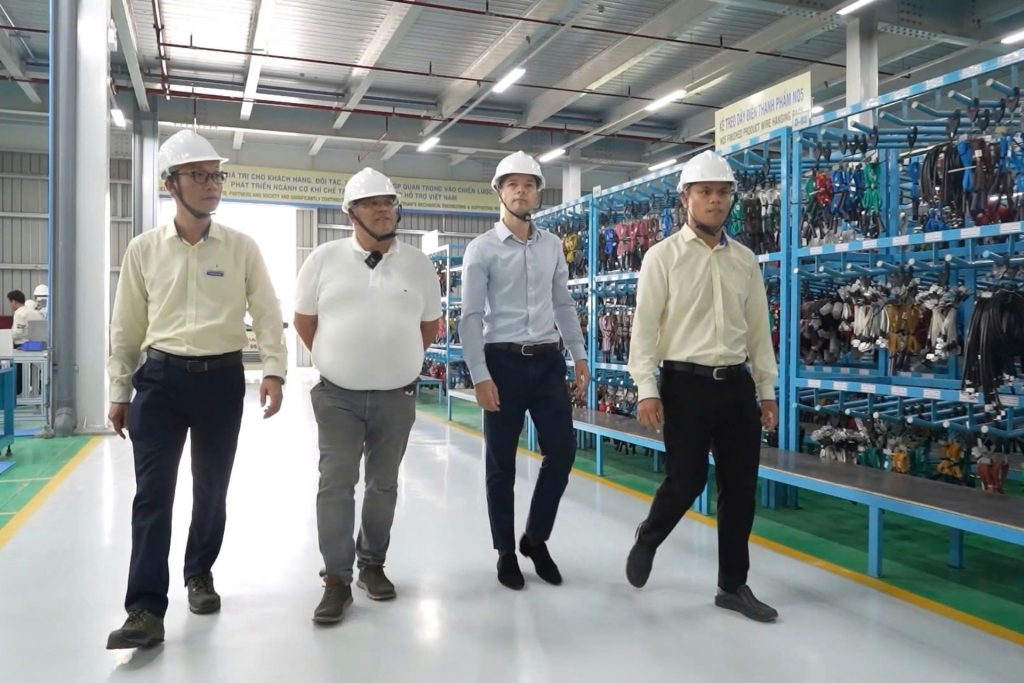
Understanding how a factory operates, how it manages quality, what processes it controls internally, which activities it subcontracts and how it manages its own supplier network requires more than a factory profile or an initial online meeting. This is where on-the-ground assessment and local execution become critical.
Key Takeaways from the September 2026 Webinar
On September 24, 2026, FVSource hosted Beyond China+1: Rethinking Manufacturing in Asia, bringing together European and Asian perspectives on manufacturing diversification, supplier selection, and long-term production strategies.
Rethinking Manufacturing Strategy: From Europe to Asia – Kim Nguyen
Kim examined the pressures reshaping European manufacturing, including tightening labour markets, rising compliance requirements and regional supply chain concentration. She explained how these developments are encouraging companies to reassess traditional European production models and explore complementary manufacturing capabilities across Asia.
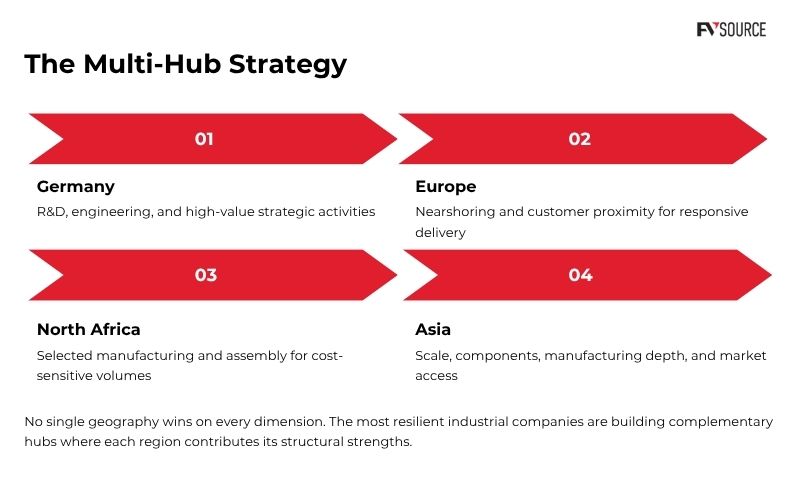
Her presentation highlighted the different industrial strengths of China, India, Vietnam, Thailand and Malaysia, alongside a multi-hub strategy combining European engineering and customer proximity with manufacturing capacity in other regions.
Two case studies demonstrated this approach: qualifying two Vietnamese manufacturers for a 700-ton steel structure project, and screening 132 electronics factories across Vietnam, Malaysia and Thailand to identify potential production partners.
Identifying the Right Outsourcing Opportunity in Asia – Pietro Karjalainen
Pietro focused on how companies can translate manufacturing diversification strategies into practical outsourcing decisions. He explained why China+1 should complement existing supply chains rather than automatically replace them, and outlined the differences between sourcing, outsourcing and ODM/OEM models, particularly regarding product ownership and operational control.
His presentation emphasized evaluating the industrial ecosystem surrounding a factory, including supplier depth, engineering capabilities, components, workforce and logistics. He also discussed the importance of matching suppliers with technical complexity, production volumes, quality requirements and scalability from prototype to mass production.
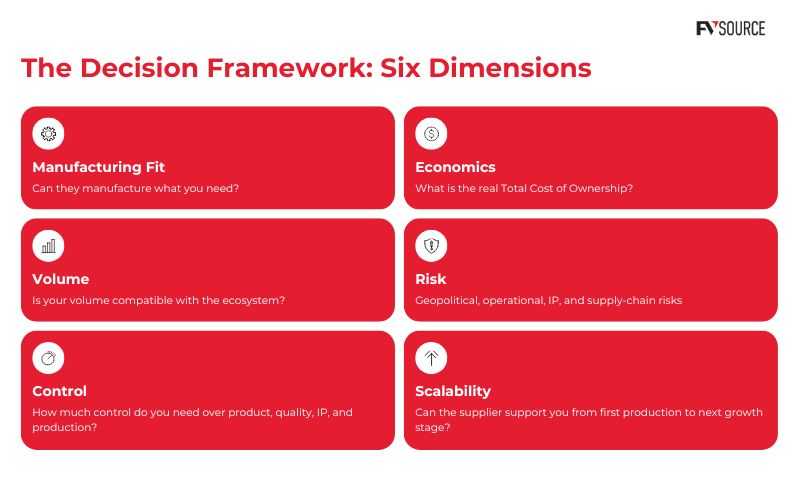
Finally, Pietro introduced a six-dimension decision framework covering manufacturing fit, volume, control, economics, risk and scalability. Rather than relying on unit prices, companies should assess Total Cost of Ownership, operational risks and the additional complexity associated with diversification.
Together, the two presentations highlighted the importance of connecting long-term manufacturing strategy with practical supplier evaluation. Successful diversification requires not only identifying suitable production markets but also understanding the capabilities, costs and operational risks involved in building reliable manufacturing partnerships.
What Should European Manufacturers Look At?
For companies evaluating manufacturing opportunities across Asia, several questions should be addressed before committing to a new production setup.
Does the market have the right manufacturing capabilities?
Not every manufacturing cluster is suitable for every product or process. Understanding the local industrial base and its technical capabilities is the first step.
Is there a supporting industrial ecosystem?
The availability of qualified subcontractors, tooling, finishing, components, logistics and technical services can have a direct impact on the feasibility and efficiency of a production project.
Can the production setup meet the required quality and technical standards?
Production capacity alone is not enough. Quality systems, engineering capabilities, traceability, process control and quality assurance need to be assessed against the project’s specific requirements.
Can production be effectively managed from Europe?
Distance can create challenges around communication, production follow-up, quality control, problem-solving and supplier coordination. Having the right local support can make a significant difference to execution.
Does the supply chain work commercially over the long term?
A competitive quotation is only one part of the equation. Total cost, lead times, quality performance, logistics, production stability and operational requirements all need to be considered throughout the production cycle.
These factors ultimately determine whether a manufacturing setup is viable — and whether it can support the business beyond the first production order.
About FVSource
FVSource is a Vietnam-based supply chain and sourcing partner supporting international companies with supplier identification, factory assessment, factory visits, production management and quality control across Vietnam and Southeast Asia.
The team combines international supply chain experience with on-the-ground capabilities to help companies evaluate manufacturing environments, assess suppliers, manage production and execute supply chain projects in the region.

