
Environmental Technology Opportunities in Vietnam
- October 26, 2026
- Posted by: marketing
- Categories: Market Entry, Uncategorized
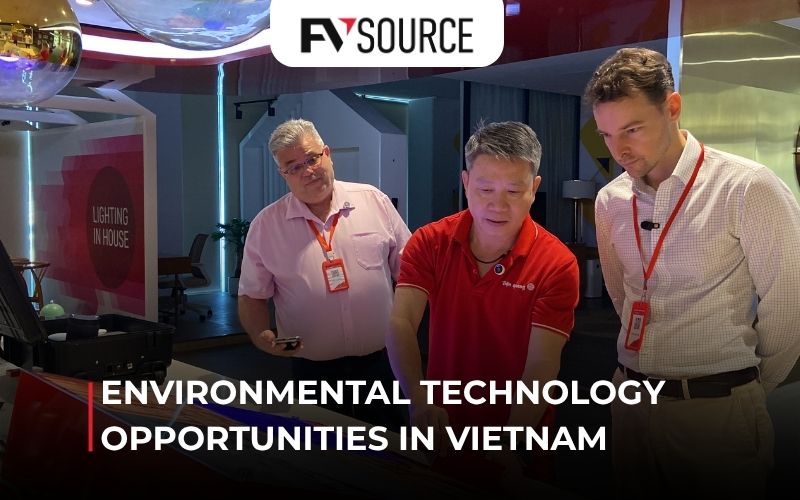
Vietnam’s industrial expansion and urban development are increasing demand for environmental solutions, particularly in wastewater treatment, waste management, emissions control, and environmental monitoring. For foreign companies, opportunities lie in providing technologies that help industrial operators manage waste, improve resource efficiency, and meet environmental requirements. Key areas to explore include wastewater treatment and reuse, waste recovery, and industrial pollution control.
What Is Driving Demand for Environmental Technology in Vietnam?
Industrialization and Urban Environmental Pressure
Environmental technology demand is closely tied to Vietnam’s economic and industrial activity. Manufacturing remains an important source of demand for water, energy, and raw materials, while production generates wastewater, solid waste, and air emissions that must be managed as part of normal operations.
Recent industrial data illustrates the scale of the underlying activity. In October 2026, Vietnam’s manufacturing and processing sector recorded year-on-year growth of 15.7%, while the water supply, waste and wastewater management sector increased by 7.8%, according to the National Statistics Office of Vietnam. For the first ten months of 2026, these sectors grew by 13.0% and 9.2%, respectively. While these figures do not directly measure the environmental technology market, they highlight the continued expansion of industrial activity and the growing importance of supporting environmental infrastructure and services.
Industrial parks are particularly relevant. As more manufacturing capacity is concentrated in these areas, centralized wastewater treatment, waste collection, and environmental monitoring become infrastructure requirements rather than optional additions.
Urban development creates a similar need. Wastewater collection and treatment remain areas where infrastructure investment and operational improvements are still required. The World Bank has previously identified low-cost recovery and substantial financing requirements as constraints in Vietnam’s urban wastewater sector, highlighting why technology decisions need to be considered together with infrastructure financing and long-term operations.
Vietnam’s environmental technology opportunities are part of a broader shift in the country’s industrial landscape. In this video, we explore where foreign companies can find business opportunities in Vietnam, from manufacturing automation, industrial machinery, and electronics to wastewater treatment, recycling, and waste-to-energy. The discussion also looks at the technology gaps across these sectors and what it takes to enter the market, including finding qualified local partners, understanding business culture, and navigating project development.
Stricter Environmental Requirements
Regulation is another important demand driver. Under Vietnam’s environmental protection framework, wastewater must be collected and treated to applicable environmental technical standards before discharge, while wastewater reuse is encouraged where environmental and use requirements are satisfied. Air emissions also need to be collected and treated in accordance with environmental requirements.
The application timeline also depends on project status. New investment projects falling within the scope of these regulations must comply with the applicable 2025 standards, while certain existing facilities and projects that meet the transitional conditions may continue applying the corresponding previous wastewater standards until December 31, 2031. This distinction is important when assessing upgrade requirements and investment timing.
The application timeline also depends on project status. New investment projects falling within the scope of these regulations must comply with the 2025 standards, while certain existing facilities and previously approved projects benefit from transitional provisions until December 31, 2031. This distinction is important when assessing upgrade requirements and investment timing.
For businesses, the implication is straightforward: environmental technology is increasingly connected to compliance, permitting, and operational continuity. A treatment system that cannot consistently meet the applicable requirements can become a production risk, not merely an environmental issue.
From Waste Treatment to Resource Efficiency
The business case is also shifting beyond end-of-pipe treatment. Companies are increasingly looking at how water, materials, and waste streams affect operating costs and supply chain requirements.
Wastewater reuse is one example. A World Bank-supported feasibility study in the Phu Noi Industrial Park examined wastewater reuse as a way to provide industry with an additional water source while reducing the discharge of polluted wastewater. Similar assessments were being considered for other industrial parks.
This distinction matters for technology suppliers. Solutions that reduce freshwater consumption, recover useful materials, or lower operating costs can potentially compete on more than regulatory compliance alone.
Key Environmental Technology Opportunities in Vietnam
Wastewater Treatment and Water Reuse
Wastewater treatment is one of the clearest areas of environmental technology demand because it sits directly at the intersection of industrial production, infrastructure, and regulation.
Industrial facilities need treatment systems suited to their specific production processes and wastewater characteristics. Industrial parks may require centralized treatment capacity, while individual factories may need pre-treatment or process-specific systems before wastewater enters a common facility.
Technology opportunities range from biological and chemical treatment to membrane systems, filtration, automation, and water reuse. The right solution depends heavily on the wastewater profile, required discharge standard, available land, energy costs, and operating model.
Water reuse adds another dimension. Rather than treating wastewater solely as a disposal problem, industrial users can evaluate whether treated water can be reused for suitable applications. This can be relevant in water-intensive industries where reducing freshwater consumption has a measurable operational value. The World Bank’s work on industrial-park wastewater reuse in Vietnam demonstrates how such projects require not only technical feasibility but also financing, procurement, and management arrangements.
For suppliers, this means the opportunity is broader than selling treatment equipment. Engineering, system integration, commissioning, operation, and maintenance can all form part of the commercial model.
Waste Management and Resource Recovery
Vietnam’s waste management opportunity extends from collection and treatment to recycling and resource recovery.
The policy direction is increasingly relevant to manufacturers and importers. In April 2026, the government issued Decree 110/2026/ND-CP, further detailing producer and importer responsibilities for product and packaging recycling, as well as waste treatment obligations. Circular 24/2026/TT-BNNMT, effective from May 25, 2026, provides additional implementation guidance.
These regulations strengthen the framework for Extended Producer Responsibility (EPR), under which applicable producers and importers have responsibilities relating to product and packaging recycling and waste treatment.
For businesses, this creates potential demand for technologies and services that improve the identification, collection, sorting, processing, and recovery of materials.
The commercial opportunity is not necessarily in building large waste-treatment facilities. Depending on the application, it may involve sorting equipment, recycling systems, organic-waste treatment, material recovery, data systems, or services that help manufacturers manage their waste obligations.
The stronger opportunities are likely to be application-specific. A recycling technology needs a reliable waste stream and a viable downstream market for recovered materials, with project economics that remain viable after collection, transportation, and processing costs are included.
Industrial Emissions and Air Pollution Control
Industrial emissions control represents another established area of environmental technology demand. Manufacturing processes can generate dust, particulate matter, and other emissions that require appropriate collection, treatment, and monitoring. The Law on Environmental Protection requires air emissions to be collected and treated in accordance with environmental requirements.
Technology opportunities include filtration, dust collection, emission-treatment systems, and monitoring equipment. The business case is particularly relevant when companies are upgrading production facilities or addressing compliance requirements alongside process improvements.
Here, technology selection needs to be closely linked to the production process. A generic filtration system is unlikely to be sufficient for every factory. Buyers need to consider the type and concentration of pollutants, operating temperature, airflow, maintenance requirements, energy consumption, and applicable standards. That makes technical engineering and local service capability important parts of the value proposition.
Environmental Monitoring and Digital Solutions
Environmental technology is not limited to physical treatment systems. Monitoring and data management are becoming an increasingly important layer of environmental management.
Sensors, automated measurement systems, remote monitoring, and environmental data platforms can help companies track wastewater, emissions, and other environmental parameters. Vietnam’s policy direction also includes strengthening environmental and resource monitoring systems.
For industrial users, the value of monitoring technology is practical: better data can support compliance management, identify abnormal operating conditions, and provide evidence for internal and external reporting.
The opportunity is therefore less about selling a standalone sensor and more about integrating reliable measurement into a broader environmental management system.
Where the Commercial Opportunities Lie
For environmental technology companies, market entry is not necessarily a choice between selling equipment directly to factories or pursuing large government projects. There is a broader ecosystem of suppliers, engineering firms, operators, and local partners.
Supplying Technology to Industrial Customers
Factories and industrial parks can require equipment, engineering, and ongoing technical services. Foreign technology providers may therefore enter through equipment supply, system integration, engineering partnerships, or local distributors.
Retrofit projects can also be relevant. Existing facilities may need capacity upgrades, process optimization, or replacement of outdated components without completely rebuilding the system. This creates a different sales proposition from new-build infrastructure and can shorten the scope of individual projects, although site-specific engineering remains important.
Infrastructure and Large-Scale Environmental Projects
Municipal wastewater and waste-management infrastructure can create larger project opportunities, but these projects typically involve longer planning and procurement cycles than a direct industrial sale.
Vietnam’s own planning documents set environmental infrastructure objectives, including expanding wastewater treatment and improving solid-waste management. The national planning framework includes a target for wastewater treatment to meet environmental technical standards and calls for modern, centralized waste-treatment facilities.
For suppliers, the implication is that technical capability alone may not be enough. Project financing, procurement structure, local relationships, and the ability to support implementation over several years can affect whether a technically suitable solution becomes a commercially viable project.
Local Partnerships and Technology Transfer
Local delivery capability is often as important as the technology itself. A foreign supplier may have strong equipment and engineering expertise but still need a Vietnamese partner for installation, commissioning, maintenance, customer relationships, or regulatory coordination. In some cases, local engineering and service capacity can also reduce downtime and spare-parts lead times.
This is particularly relevant for systems that require continuous operation. A treatment plant that depends on imported components but lacks accessible technical support may be difficult for an industrial buyer to justify, even if the underlying technology performs well.
What Determines Commercial Viability?
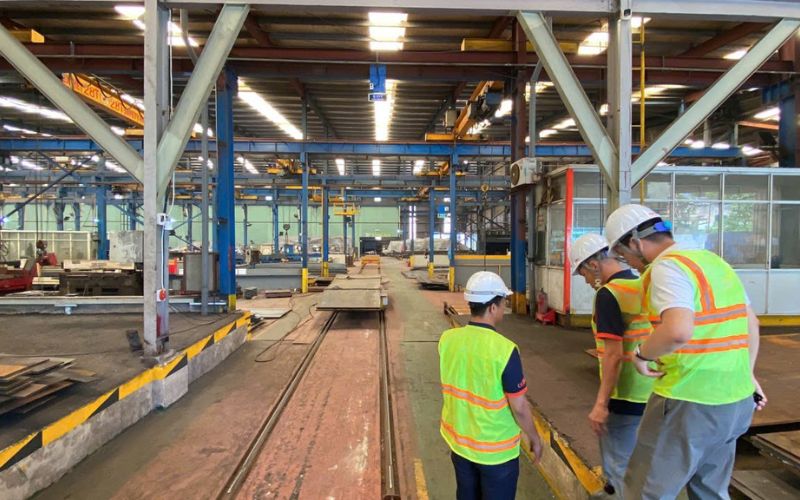
Environmental technology projects should be evaluated as operating systems rather than equipment purchases. A lower purchase price does not necessarily mean a lower-cost solution over the life of the project.
Total Cost of Ownership and ROI
Buyers need to look beyond initial CAPEX. Energy consumption, chemicals, maintenance, replacement components, labor, and downtime can materially affect the economics of a treatment or monitoring system.
This is particularly important for technologies with high energy requirements. A system that delivers excellent treatment performance but requires substantially more electricity may have a weaker long-term business case than a slightly more expensive system with lower operating costs.
The same principle applies to water reuse and resource recovery. A project should be assessed against the value of avoided freshwater purchases, disposal costs, recovered materials, or compliance risks rather than technology cost alone.
Local Supply Chain and Technical Support
Environmental systems often operate continuously and cannot be treated like one-time capital purchases. Before selecting a supplier, businesses should consider where critical components are manufactured, how quickly spare parts can be obtained, who will maintain the system, and whether local technicians are available.
For foreign technology companies, establishing a local service network can therefore be more important than simply appointing a sales representative. For buyers, serviceability should form part of the procurement evaluation from the beginning.
Regulatory and Project Requirements
Environmental projects also need to be assessed against the regulations applicable to the specific facility and discharge or emission source.
Vietnam’s regulatory framework continues to evolve. Recent wastewater standards and the 2026 rules on producer responsibility illustrate why companies should verify the current requirements for their particular project rather than relying on older specifications or generic market assumptions.
For international suppliers, this makes local technical and regulatory knowledge valuable during project design. A solution designed for another market may need adjustments to meet Vietnamese requirements, site conditions, or procurement specifications.
Challenges for Environmental Technology Companies
The market also has practical barriers. Advanced environmental systems can require substantial upfront investment, while customers may have difficulty justifying projects whose financial return is mainly compliance-related. This is one reason technologies that combine environmental performance with lower water, energy, or material costs can have a clearer business case.
Sales cycles can also be long, particularly for infrastructure projects. Multiple technical, financial, and regulatory stakeholders may be involved before a project moves from initial assessment to procurement.
Another challenge is market fragmentation. Environmental needs vary considerably between municipalities, industrial parks, and individual factories. A solution that works well for one application may not be economically or technically appropriate for another.
Foreign technology providers also need to consider the availability of qualified local partners, the cost of after-sales support, and the ability to adapt equipment and operating systems to local site conditions. These factors can influence both the initial project decision and the long-term performance of an installed system.
For technology companies entering Vietnam, the lesson is to avoid treating the market as a single customer group. Product-market fit needs to be assessed at the level of the application, industry, and operating environment.
Outlook for Environmental Technology Opportunities in Vietnam
Vietnam’s environmental technology market presents opportunities across wastewater treatment, waste management, industrial emissions control, and environmental monitoring. These opportunities are supported by industrial expansion, evolving environmental requirements, and the growing need for more efficient resource management.
For international technology providers, however, entering Vietnam requires more than introducing a competitive product or technical solution. Commercial success depends on identifying the right customer segments, understanding local regulatory requirements, evaluating project economics, and establishing reliable local partnerships.
The ability to identify qualified engineering partners, assess local implementation capabilities, and provide long-term technical support can make a significant difference in turning market opportunities into viable business projects.
For companies considering Vietnam, the starting point should be a clear assessment of where their technology fits, who the potential customers are, and what local capabilities are needed to deliver the solution successfully.
Ultimately, Vietnam should be evaluated not simply as a market for environmental equipment, but as an opportunity to build long-term partnerships around technology, engineering, and environmental infrastructure.

