
Doing Business in Vietnam 2026: Opportunities, Investment, and Market Entry Insights
- April 2, 2026
- Posted by: assistant
- Category: Uncategorized
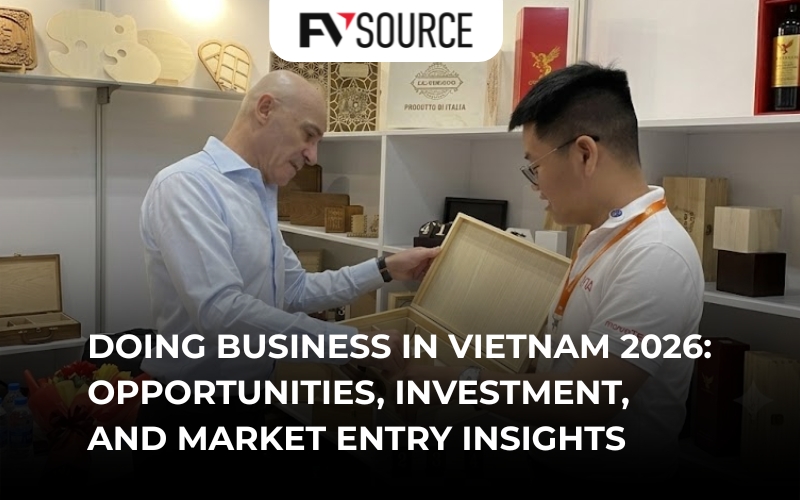
Vietnam’s economic performance in 2026 has become difficult for global investors and executives to ignore. In the first quarter of 2026, Vietnam’sGDP grew by 7.83% year-on-year, one of the fastest growth rates in Southeast Asia. During the first three months of 2026, Vietnam attracted over US$15.2 billion in total foreign direct investment (FDI), while cumulative disbursed capital reached US$355.7 billion, reflecting continued confidence from international businesses despite global economic uncertainty. For companies evaluating expansion strategies, the discussion around doing business in Vietnam is no longer about future potential; it is about understanding how to participate in one of the region’s fastest-growing markets.
However, strong economic indicators alone do not guarantee business success. Companies entering a new market still need to navigate regulations, evaluate sourcing opportunities, understand local business practices, and choose the right market-entry model. This guide explores the key factors shaping Vietnam business opportunities in 2026, including economic trends, foreign investment activity, market-entry considerations, sourcing advantages, and the cultural realities of building a successful business in Vietnam for foreigners. Whether you are considering investment, manufacturing, or regional expansion, these insights will help you evaluate Vietnam’s role in your broader Southeast Asia business strategy.
Vietnam’s Economy in 2026 and the Numbers Driving Growth
For executives evaluating where to expand, invest, or source, Vietnam’s appeal in 2026 is backed by more than headlines. The country entered the year with strong momentum across GDP growth, foreign investment, exports, and consumer spending.
Together, these indicators help explain why more international companies are exploring new opportunities for doing business in Vietnam and reassessing their Southeast Asia strategy.
Key Drivers of Vietnam’s Economic Growth
Vietnam’s GDP grew by 7.83% in the first quarter of 2026, making it one of the fastest-growing economies in Southeast Asia. The performance followed a strong8.02% GDP expansion in 2025, the country’shighest annual growth rate since 2011. With the economy reaching approximately US$514 billion, Vietnam has continued moving up the regional economic rankings. Three major growth engines are driving this momentum.
First, manufacturing and exports remain a core pillar, particularly in electronics and industrial production. Second, foreign direct investment continues to accelerate, with registered FDI reachingUS$15.2 billion in Q1 2026, up 42.9% year-on-year. Third, domestic demand is strengthening, with final consumption rising 8.45% in the first quarter as incomes and consumer confidence improve.
That said, experienced business leaders should recognize both sides of the story. Vietnam’s openness to global trade is a major strength, but it also creates exposure to external risks such as tariffs, geopolitical disruptions, and shifts in global demand. Understanding both the opportunities and vulnerabilities is essential when evaluating long-term Vietnam business opportunities.
Vietnam’s Competitive Edge in Southeast Asia
Vietnam’s advantage is not that it is the cheapest market in Southeast Asia. Countries such as Cambodia, Laos, and Myanmar may offer lower labor costs. Instead, Vietnam’s position comes from the combination of cost competitiveness, manufacturing capability, infrastructure development, and international market access.
The country now participates inmore than 15 free trade agreements, including EVFTA, CPTPP, and RCEP, providing preferential access to key markets across Europe, the Asia-Pacific, and beyond. At the same time, continued supply chain diversification is encouraging manufacturers to expand operations in Vietnam as an alternative production base.
For companies evaluating doing business in Vietnam as a foreigner, the country’s ability to combine growth, market access, manufacturing depth, and policy stability remains one of the strongest business cases in Southeast Asia today.
Vietnam’s FDI Landscape in 2026
Foreign direct investment remains one of the strongest indicators of international confidence in Vietnam’s economy. In 2026, investment activity continues to accelerate across manufacturing, infrastructure, technology, and industrial development. For companies evaluating Vietnam business opportunities, understanding where capital is flowing can provide valuable insight into where future growth is likely to occur.
FDI Inflows and Major Target Sectors
In the first quarter of 2026, total registered FDI reached approximately US$15.2 billion, an increase of 42.9% compared with the same period in 2025. At the same time,disbursed FDI reached US$7.4 billion, marking the highest four-month disbursement level in five years.
Singapore remained Vietnam’s largest foreign investor, followed by South Korea and China. Manufacturing continued to dominate investment activity, accounting for roughly two-thirds of total registered capital, while utilities, energy, and real estate also attracted significant inflows.
Geographically, investment remained concentrated in Vietnam’s major industrial hubs, including Bắc Ninh, Hải Phòng, Đồng Nai, and Hưng Yên. Several high-profile projects reinforced this trend, including Samsung’s announced US$1.2 billion semiconductor-related investment in Thái Nguyên and BYD’s continued expansion of electronics manufacturing operations in northern Vietnam.
More importantly, Vietnam is increasingly attracting higher-quality investment. Government policy is focused not only on increasing FDI volume but also on encouraging projects in advanced manufacturing, semiconductors, technology, and innovation-driven industries.
FDI Wave Impacts on Smaller Foreign Enterprises
Large multinational investments often create opportunities for smaller foreign businesses. As companies such as Samsung, LG, Apple suppliers, and BYD expand their operations, demand grows for supporting suppliers, service providers, logistics partners, and specialized manufacturing capabilities.
However, increased investment also creates competition. Industrial land prices in key manufacturing provinces have continued to rise, while demand for skilled labor is putting upward pressure on wages. For SMEs considering doing business in Vietnam, timing matters. Entering the market earlier may provide access to lower operating costs and a less competitive supplier landscape than companies may face several years from now.
For many foreign firms, the opportunity is no longer simply entering Vietnam; it is positioning themselves within the broader ecosystem that large-scale investment is helping to create.
Market Entry in Vietnam: Practical Options for Foreign Companies in 2026
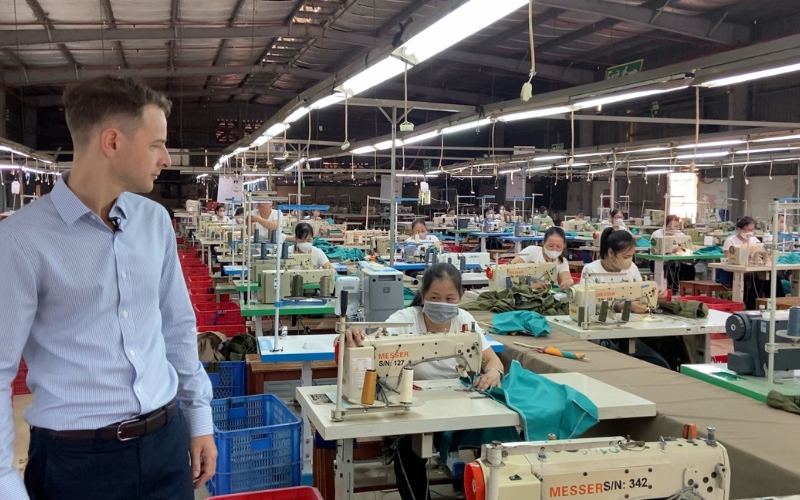
For foreign executives evaluating Southeast Asia business expansion, translating high-level Vietnam business opportunities into a grounded execution plan is the first critical hurdle. Doing business in Vietnam as a foreigner requires moving past initial optimism to select the right corporate structure and operational model. Whether your goal is light-touch distribution or full-scale manufacturing, successfully doing business in Vietnam in 2026 demands a precise alignment between your strategic objectives, budget constraints, and chosen entry vehicle.
Market Entry Strategies for Foreign Companies
When executives ask how to enter the Vietnam market, the decision typically comes down to a three-model decision framework. Choosing the right vehicle dictates your operational control, upfront capital requirements, and time to revenue:
- Distributor Model: The fastest route to market. It typically takes 3 to 6 months to secure initial sales and demands the lowest upfront capital, though it results in limited brand and pricing control. This model is highly effective for FMCG, consumer goods, and companies strictly testing the market before committing heavily.
- Wholly Foreign-Owned Entity (WFOE): The premier choice for manufacturing, long-term commitments, and IP-sensitive products. A WFOE provides absolute operational control but carries a higher upfront cost, requiring a realistic total setup budget of $150,000 to $250,000. Historically, foreign investors faced a serial bottleneck in licensing. However, under the new Investment Law No. 143/2025/QH15 (effective March 1, 2026), investors can now process the Enterprise Registration Certificate (ERC) before the Investment Registration Certificate (IRC), accelerating setup timelines to just 6–10 weeks.
- Joint Venture (JV): A JV is legally required for foreign investors entering certain restricted sectors such as media and specific services and remains an optional, strategic choice for others. While it reduces market entry risk by leveraging local relationships, it demands rigorous partner selection and air-tight corporate governance from day one.
Realistic Timeline Check: While legal incorporation under a WFOE may only take weeks, a full market entry, spanning market research, legal setup, partner acquisition, and generating first revenue, takes most companies 12 to 18 months. Planners should not rely on the 4 to 6-week timelines often touted by local setup agents.
Common Market Entry Mistakes
Navigating business in Vietnam for foreigners is complex, and early missteps can compound into expensive operational failures. Avoid these four common market entry mistakes:
- Confusing company registration with market readiness: Having a licensed legal entity does not mean you have an active sales channel, a locally compliant product, or a functioning on-the-ground team. Incorporation is merely the starting line for commercial operations.
- Choosing the largest distributor instead of the most aligned one: New entrants frequently gravitate toward mega-distributors. However, a distributor managing 50 major accounts will not prioritize your brand if you are simply brand #51. Alignment on growth metrics and dedicated market-making capacity is far more critical than sheer size.
- Underestimating the timeline and budget: Small and medium enterprises (SMEs) often attempt to budget for a 6-month ramp-up. A realistic runway for a sustainable market entry requires a 12 to 18-month outlook and a minimum capitalization of $150,000 to $250,000 to weather the initial integration phases.
- Treating Vietnam as one homogeneous market: Ho Chi Minh City and Hanoi are distinctly different commercial ecosystems. Both differ vastly from provincial Tier 2 markets. A monolithic national strategy that fails to account for regional differences in purchasing behavior and regulatory interpretation will severely underperform.
Market Entry in Vietnam: A Practical Guide for Foreign Buyers
For foreign companies evaluating expansion into Southeast Asia, Vietnam continues to stand out as one of the region’s most attractive destinations. In the first quarter of 2026, Vietnam attracted approximately US$15.2 billion in registered foreign direct investment (FDI), up 42.9% year-on-year, while GDP grew by 7.83%, reflecting strong investor confidence and economic momentum. However, successful market entry requires more than identifying a growing economy. Companies must understand which sectors offer the strongest opportunities, where those industries are concentrated, and how to select reliable local partners capable of supporting long-term growth.
Where the Best Opportunities Are in Vietnam
Not all Vietnam business opportunities are distributed equally across the country. Industrial specialization has created distinct regional clusters that foreign investors should understand before entering the market.
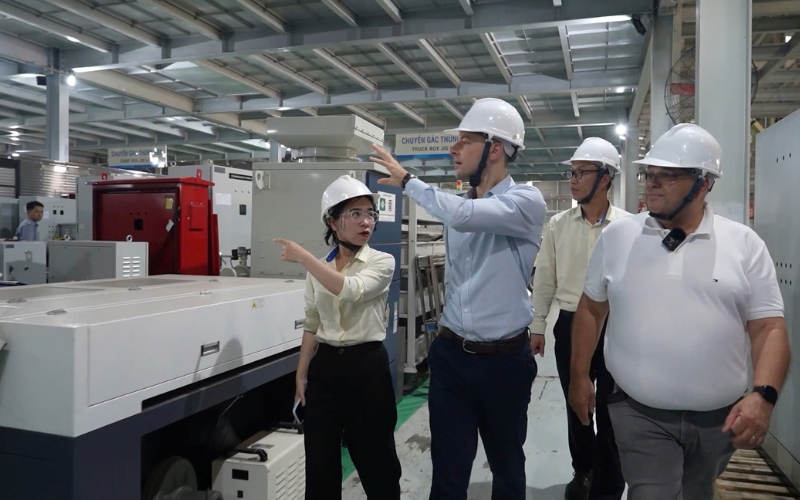
The northern provinces of Bắc Ninh, Hải Phòng, and Thái Nguyên have become Vietnam’s electronics powerhouse, supported by major investments from Samsung, LG, Foxconn, and numerous component suppliers. In 2026, continued expansion in semiconductors and advanced electronics is strengthening the region’s position as a strategic manufacturing hub.
Southern provinces such as Bình Dương, Đồng Nai, and Ho Chi Minh City remain key centers for textiles, footwear, furniture, and consumer goods manufacturing. Meanwhile, the Mekong Delta continues to dominate agricultural exports, while emerging industries including renewable energy, automotive components, medical devices, and semiconductor supply chains are attracting increasing foreign investment nationwide.
For companies considering doing business in Vietnam, selecting the right region is often as important as selecting the right sector.
How to Evaluate the Right Local Partner
Many foreign companies underestimate how important partner selection is during market entry. A strong local partner can accelerate market access, while the wrong partner can delay growth for years.
Before committing to a distributor, supplier, or strategic partner, companies should evaluate four areas. First, assess their track record with international clients and export markets. Second, verify certifications, compliance systems, and operational capabilities through independent sources. Third, examine financial stability and long-term business viability rather than relying solely on sales presentations. Finally, determine whether the partner’s growth objectives align with your own.
Successful foreign companies rarely choose partners based only on price. Instead, they prioritize reliability, transparency, and long-term strategic fit. In Vietnam’s relationship-driven business environment, partner quality often becomes one of the strongest predictors of market entry success.
Understanding Business Culture in Vietnam
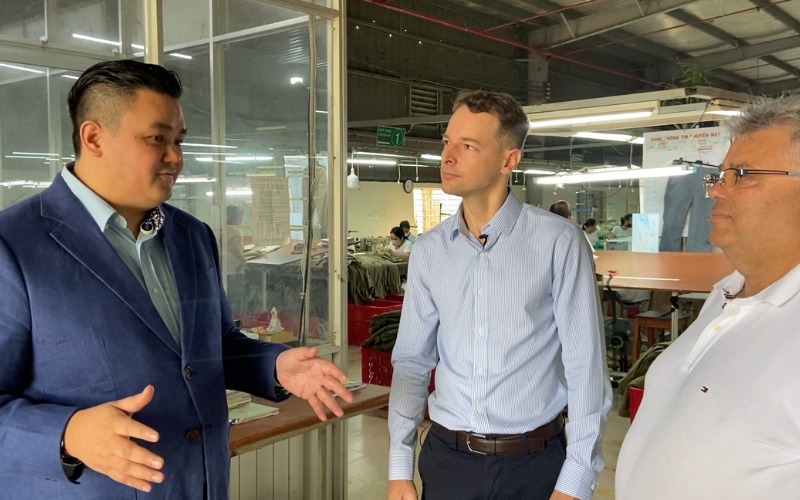
Many foreign companies spend months researching regulations, investment incentives, and market opportunities before entering Vietnam. Far fewer invest the same effort in understanding how business relationships actually work on the ground. Yet in practice, cultural misunderstandings often delay projects, weaken partnerships, and create friction long before legal or commercial issues arise. For executives focused on doing business in Vietnam as a foreigner, understanding local business culture is not a soft skill; it is a commercial advantage.
The Four Cultural Realities That Shape How Business Gets Done in Vietnam
Four practical realities influence how decisions are made and relationships develop in Vietnam.
- Hierarchy matters: Even when a management team appears aligned, final approval often comes from a senior decision-maker. Identifying the true decision-maker early and engaging them appropriately can significantly accelerate progress.
- Silence does not necessarily mean agreement: Vietnamese business culture places a high value on maintaining harmony and preserving face. A positive response in a meeting may indicate understanding rather than commitment. Important decisions often require follow-up discussions after the meeting itself.
- Relationships often come before transactions: Trust is built over time through consistent interaction. Companies that focus only on contracts and pricing may find partnerships more difficult to sustain than those that invest in relationship-building from the beginning.
- English has limits: While English is widely used in major business hubs, legal documents, government procedures, and many operational discussions still take place in Vietnamese. Bilingual communication helps reduce risk and prevent misunderstandings.
What Experienced Foreign Executives Do Differently When Working in Vietnam
Successful foreign executives tend to approach Vietnam differently from first-time market entrants.
- First, they invest time in building relationships before pushing for commercial outcomes. Early meetings are often used to establish trust rather than finalize decisions.
- Second, they follow up discussions in writing and, whenever possible, provide bilingual summaries to ensure alignment across all stakeholders.
- Third, they work through trusted local partners, advisors, or market-entry specialists who understand local business networks and can open doors more efficiently than cold outreach.
- Finally, they plan for longer decision cycles. Approval processes often involve multiple levels of review, and timelines that seem slow by Western standards are frequently normal within the local business environment.
For companies exploring business in Vietnam for foreigners, the most effective strategy is not to change how Vietnam works; it is to understand how decisions are made and adapt accordingly. Those who do often find that relationships become stronger, negotiations become smoother, and long-term business outcomes improve.
Conclusion
Vietnam in 2026 is not a market that rewards hesitation. The economy is growing at 7.83%, FDI is flowing in at a record pace, and the companies building positions now, in electronics, smart home, e-commerce, and clean energy, are the ones that will have structural advantages that later entrants cannot easily replicate. Doing business in Vietnam is increasingly not a question of whether but how: which entry model, which partners, which sectors, and which understanding of the cultural dynamics that determine whether execution succeeds. The sections above offer an overview. Each topic, such as market entry timelines, distributor strategy, factory evaluation, and electronics manufacturing, has been covered in dedicated guides linked throughout this article. For foreign companies at any stage of their Vietnam journey, those resources are the practical next step.

