
The rise of electronics manufacturing in Vietnam
- February 25, 2026
- Posted by: marketing
- Category: Manufacturing
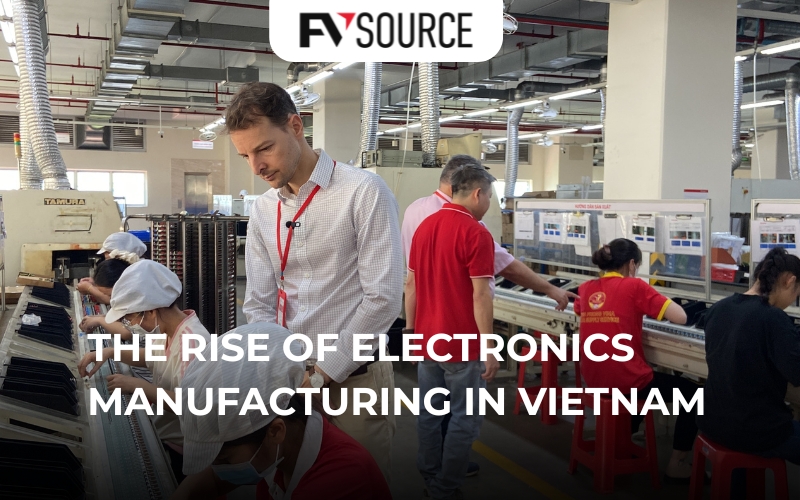
How foreign investment, industrial clusters, and supply chain dynamics turned Vietnam into a major electronics hub
Vietnam’s rise in electronics manufacturing is one of the most important industrial shifts in Asia over the past two decades. What was once a relatively modest manufacturing base has evolved into a central platform for the production of smartphones, computers, consumer electronics, telecom equipment, and a growing range of electronic components.
Vietnam’s electronics rise
This transformation did not happen overnight. It was built through a combination of foreign direct investment, industrial policy, labor competitiveness, export-oriented growth, and geographic proximity to the broader Asian supply chain. Vietnam did not initially emerge as a full-spectrum electronics ecosystem in the way that Japan, South Korea, or Taiwan did. Instead, it entered the sector through a more practical route: becoming a reliable location for assembly, scale production, and export manufacturing. From there, the country gradually deepened its capabilities, attracted larger investments, and developed more structured industrial clusters.
Today, Vietnam is no longer seen merely as an alternative manufacturing location. It has become an essential part of the global electronics supply chain. For multinational firms, Vietnam offers a combination of cost competitiveness, improving infrastructure, trade connectivity, and political stability. For buyers and investors, it represents a production base that is increasingly integrated into regional and global value chains. For Vietnam itself, electronics has become a pillar of industrial growth, export performance, and technological ambition.
The real significance of this rise is not only that Vietnam produces large volumes of electronics. It is that the country has become embedded in a system that links imported materials, regional component flows, global assembly strategies, and international consumer markets. To understand Vietnam’s position today, it is necessary to look beyond factory headlines and examine the structure behind the growth.
Electronics manufacturing – a layered ecosystem
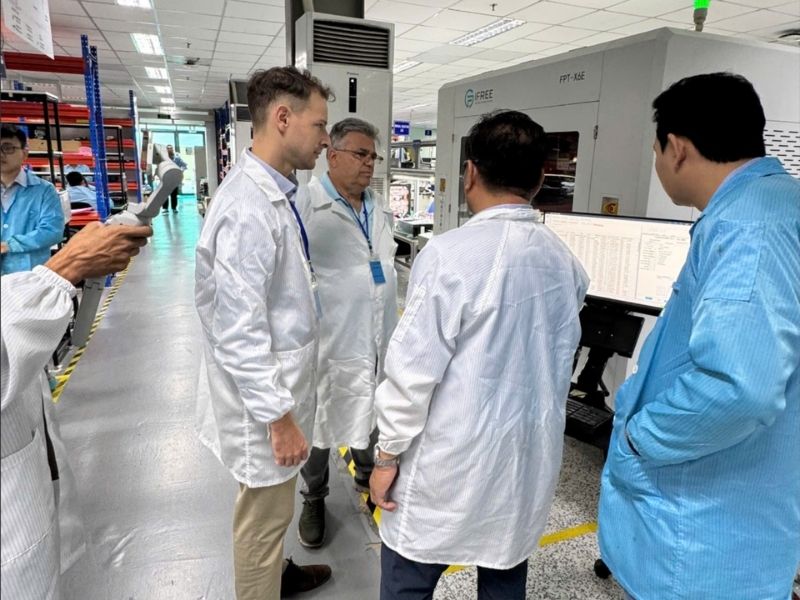
Electronics manufacturing is often misunderstood as a single industrial activity. In reality, it is a layered ecosystem made up of many specialized stages. A finished smartphone, laptop, wireless device, or industrial control unit is not produced in one simple process. It is the result of design, semiconductor supply, component fabrication, printed circuit board production, module integration, software installation, final assembly, testing, and packaging.
A useful analogy is to think of electronics manufacturing as an orchestra rather than a single instrument.
The semiconductor is not the whole song. The display, battery, connectors, PCB, housing, camera module, and software are not separate performances. They all need to work together in precise coordination. If one section is delayed, mismatched, or underperforming, the entire system suffers. A factory assembling final products may look like the visible center of the process, but behind it sits an entire network of suppliers, logistics flows, engineering specifications, and quality-control systems.
This is where Vietnam’s role becomes clearer. Vietnam has become one of the key places where the orchestra comes together. It may not yet dominate every upstream layer of the electronics system, but it has become extremely important in bringing together imported components, local labor, industrial discipline, and export logistics to produce finished products at scale.
That is why electronics manufacturing in Vietnam should not be viewed simply as a collection of factories. It should be understood as a coordination platform inside a much larger Asian and global production architecture.
Vertical integration – still limited, but evolving
One of the most important realities of Vietnam’s electronics sector is that it remains only partially vertically integrated.
Vertical integration in electronics means that more stages of the value chain are carried out within the same country or ecosystem. In a highly integrated model, a country may host chip fabrication, advanced components, module production, sub-assembly, final assembly, testing, and a strong network of domestic supporting industries. In Vietnam, the picture is more mixed.
The country has become highly capable in final assembly, product integration, testing, and export manufacturing. It also hosts selected component production and some growing supporting industries. However, many of the most advanced or strategically important inputs still come from abroad. High-value semiconductors, specialized materials, precision electronic parts, advanced displays, and many upstream components continue to be imported, often from China, South Korea, Taiwan, Japan, and other established electronics centers.
This means Vietnam’s electronics sector is strong, but not yet fully self-contained. Its success depends on the ability to import critical parts efficiently, process them competitively, and export finished products at speed and scale.
That said, vertical integration is evolving. As more global manufacturers establish long-term operations in Vietnam, supplier networks tend to follow. Some component makers relocate closer to major assemblers. Packaging, testing, module production, and selected material conversion activities begin to localize. The presence of anchor investors also encourages the development of local subcontractors, logistics providers, industrial service companies, and engineering talent.
So while Vietnam is still assembly-heavy in many segments, it is no longer accurate to describe it as a simple low-cost assembly base. The country is moving gradually toward a deeper industrial role, even if the most advanced upstream layers remain concentrated elsewhere.
FDI – the backbone of the industry
Foreign direct investment has been the single most important driver behind Vietnam’s electronics boom.
Vietnam did not build its electronics sector first through large domestic champions and then invite foreign firms to participate. In many cases, the sequence was the opposite. Global investors entered, established production, built supplier relationships, created export flows, and effectively shaped the industry’s early structure. This is why FDI remains the backbone of the sector.
The advantages for foreign investors were clear. Vietnam offered lower labor costs than China, a large and trainable workforce, an increasingly attractive industrial policy environment, and access to an expanding network of free trade agreements. At the same time, Vietnam’s geographic location made it possible to remain close to the Asian supplier base, especially the massive component ecosystem in southern China and Northeast Asia.
For multinational electronics firms, Vietnam became a practical answer to several strategic needs at once. It reduced overdependence on one country, improved resilience through diversification, and created a platform for large-scale exports to the United States, Europe, and other markets.
FDI also shaped the structure of the sector in another important way: it created concentration. A relatively small number of very large foreign-invested firms account for a disproportionate share of Vietnam’s electronics output and exports. This model has delivered rapid industrial growth, but it also means that the sector is highly influenced by the investment strategies, sourcing decisions, and global demand cycles of a handful of multinational players.
In other words, FDI has accelerated Vietnam’s rise, but it also defines the sector’s current limits. Vietnam has become central to production, yet much of the decision-making, technology ownership, and upstream value capture still sits outside the country.
Major investors – the companies shaping the ecosystem
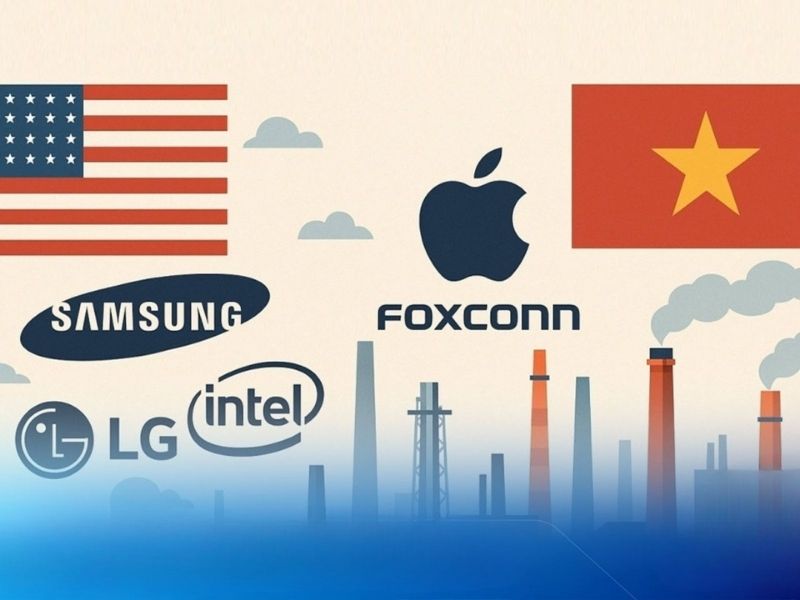
Vietnam’s electronics sector has been shaped by a group of large multinational firms whose scale has transformed both the industrial map and the country’s export profile.
Samsung is the clearest example. More than any other single company, Samsung helped position Vietnam as a major global electronics manufacturing hub. Its presence created large-scale smartphone production, supplier inflows, employment, export growth, and industrial confidence. The country became deeply important to Samsung’s global manufacturing strategy, especially in mobile devices and related electronics.
Alongside Samsung, companies linked to Apple’s supplier network have expanded their presence in Vietnam, including firms involved in assembly, accessories, and sub-components. Foxconn, Luxshare, Goertek, and other contract manufacturers have helped deepen Vietnam’s role in consumer electronics and device assembly.
Intel has also played a significant role, particularly in testing and packaging operations, reinforcing Vietnam’s place within more technical parts of the electronics chain. LG has been another major contributor, especially in consumer electronics and related production. Additional firms from China, Taiwan, Japan, and South Korea continue to strengthen Vietnam’s position across various electronics categories.
These companies matter not only because of their output volumes, but because they anchor ecosystems. When a major global investor establishes a large operation, it creates demand for suppliers, tooling, industrial services, transport, warehousing, quality-control systems, and trained labor. The impact therefore extends well beyond the factory gate.
Vietnam’s electronics rise is, in many ways, the story of how a country leveraged the presence of major anchor investors to build industrial density around them.
Electronics exports – the engine of the sector
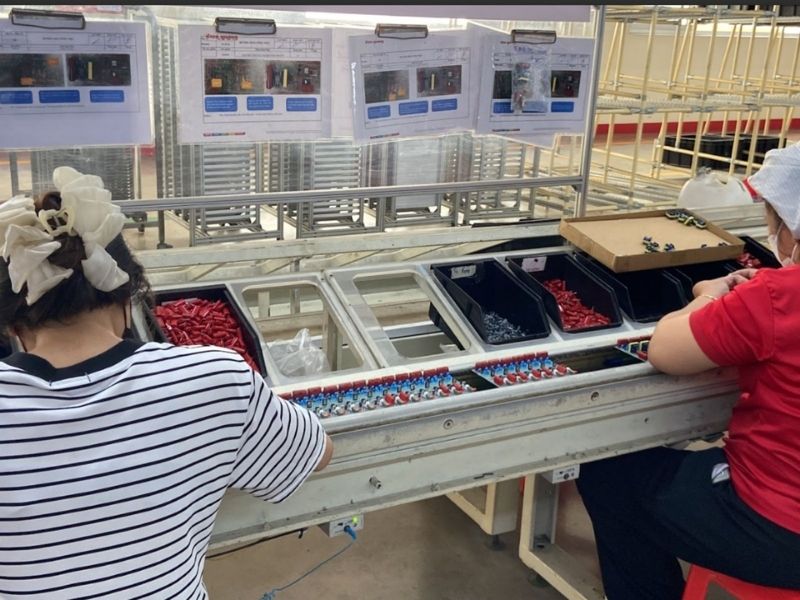
Electronics has become one of the strongest pillars of Vietnam’s export economy.
Phones, computers, electronic devices, and components now rank among the country’s leading export categories. This matters because electronics is not just another manufacturing sector in Vietnam; it is one of the main engines through which the country connects to global trade.
The export logic is straightforward. Vietnam imports a large volume of components and materials, assembles or integrates them into finished products, performs testing and quality control, and ships them to end markets around the world. This model has allowed Vietnam to scale very quickly. Instead of needing to fully localize every upstream input before competing internationally, the country integrated itself into an already globalized production architecture.
This export orientation has several consequences.
First, it gives the sector scale. Factories are built not primarily for domestic demand, but for global markets. That supports larger production volumes and attracts investors looking for international manufacturing platforms.
Second, it ties Vietnam’s performance closely to external demand. When consumer electronics demand rises globally, Vietnam benefits. When global markets slow, the sector feels the impact.
Third, it reinforces the need for logistical efficiency. Electronics products are time-sensitive, quality-sensitive, and highly dependent on predictable supply-chain management. Export success therefore depends not only on factory output, but also on ports, customs efficiency, road connectivity, and the ability to move goods in and out without costly delays.
Vietnam’s export success in electronics is a sign of real industrial strength. But it also reflects the country’s position inside a highly globalized system where speed, reliability, and competitiveness matter as much as manufacturing capability itself.
Industrial clusters – where the sector is concentrated
Vietnam’s electronics sector is not spread evenly across the country. It is concentrated in a series of industrial clusters that provide infrastructure, labor access, supplier proximity, and export connectivity.
In the north, provinces such as Bac Ninh, Thai Nguyen, Hai Phong, and areas around Hanoi have become especially important. These locations benefit from proximity to China, strong industrial park development, improving logistics, and the presence of major anchor investors. Northern Vietnam has become one of the country’s most important electronics belts, particularly for large-scale assembly and export production.
In the south, Ho Chi Minh City and surrounding provinces such as Binh Duong and Dong Nai continue to play a major role. The Saigon Hi-Tech Park stands out as one of the country’s most prominent high-tech industrial zones, hosting advanced manufacturing, R&D-related functions, and technology-oriented investors. This southern ecosystem benefits from an established industrial base, strong supporting industries, and access to major ports and commercial infrastructure.
These clusters matter because electronics manufacturing works best when ecosystems form around concentration. A large assembler does not want critical suppliers to be too far away. A component manufacturer benefits from being near major customers. Logistics providers become more efficient when industrial demand is dense. Skilled labor is easier to attract when multiple employers in the same sector operate in one zone.
This is how clusters create momentum. They reduce friction, improve coordination, and make future investment easier. Vietnam’s success in electronics is therefore not only national. It is also highly geographic, driven by the emergence of dense industrial corridors.
Imported components and materials – the hidden structure behind exports
One of the most important points in understanding Vietnam’s electronics sector is that high export values do not automatically mean high domestic value addition.
A large share of the components and materials used in electronics production in Vietnam is still imported. These imports include semiconductors, integrated circuits, displays, connectors, sensors, batteries, PCB inputs, specialty plastics, metals, chemicals, and other precision parts needed for manufacturing. In many cases, Vietnam’s role is to receive these inputs, integrate them into finished or semi-finished products, test them, and then export them onward.
This model is not a weakness in itself. It is how many globally successful manufacturing systems develop in their earlier stages. But it does reveal the structure of the sector. Vietnam’s strength lies in coordination, assembly, labor productivity, industrial execution, and export capacity. Its dependence lies in upstream technology, specialized materials, and high-value components.
That dependence has practical implications. It means that Vietnam remains sensitive to external supply disruptions, trade tensions, and regional bottlenecks. It also means that future upgrading will require more than simply expanding factory floor space. The country will need to deepen its supporting industries, attract more component makers, and gradually strengthen local capabilities in areas where domestic firms can realistically compete.
The most likely path is not full self-sufficiency. Electronics is too global for that. The more realistic objective is to increase the share of the value chain that can be performed competitively within Vietnam.
Industry dynamics – speed, scale, and structural limits
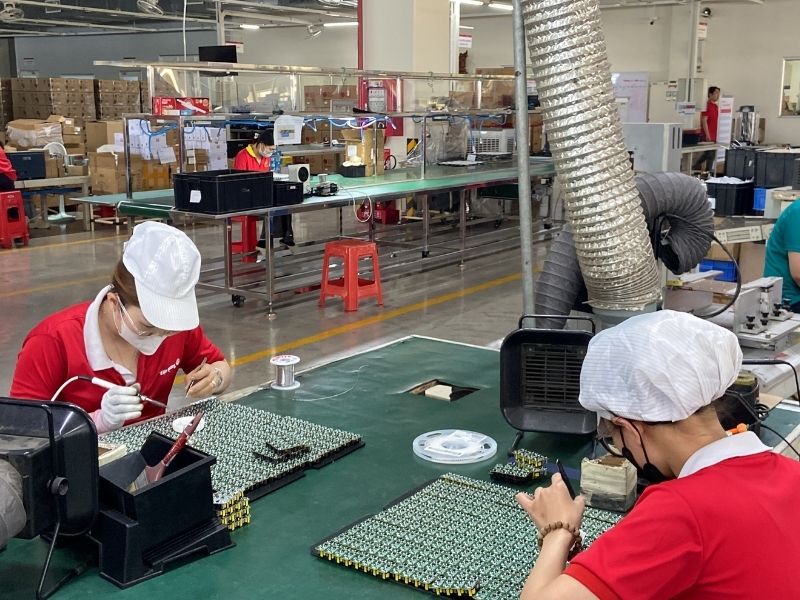
Vietnam’s electronics sector is shaped by a specific set of dynamics.
The first is speed of scale-up. Once major investors commit, Vietnam has shown that it can ramp up capacity quickly. Industrial parks, labor mobilization, export systems, and supporting infrastructure can be aligned relatively fast compared with many emerging markets.
The second is cluster-led efficiency. Electronics growth in Vietnam is not random; it is reinforced by geographic concentration and ecosystem effects.
The third is FDI dependence. The sector’s strength comes largely from foreign-invested firms, but that also means Vietnam remains vulnerable to external corporate decisions.
The fourth is upgrading pressure. Vietnam cannot rely indefinitely on labor-cost advantage alone. As wages rise and competition intensifies, the country will need to deepen engineering capability, supplier sophistication, and technology participation.
The fifth is strategic opportunity. Global supply chains are being rebalanced. Companies want diversification, resilience, and alternatives to overconcentrated manufacturing models. Vietnam is well positioned to benefit from that trend, but only if it continues improving infrastructure, industrial depth, and workforce quality.
These dynamics explain why the sector is both impressive and incomplete. Vietnam has achieved a remarkable industrial position, but it is still in transition from being a major assembly platform toward becoming a more deeply integrated electronics ecosystem.
Conclusion – Vietnam’s next move in electronics
Vietnam’s rise in electronics manufacturing is not just a story of cheaper labor or factory relocation. It is the story of how a country positioned itself inside one of the most demanding and interconnected industrial systems in the world.
By combining foreign investment, export-oriented growth, industrial clustering, and pragmatic integration into Asian supply chains, Vietnam has become a central manufacturing platform for electronics. It now plays a critical role in the production of devices and systems used around the world.
At the same time, the structure of the sector remains clear. Vietnam is strong in assembly, testing, scale production, and export execution. It is less strong in upstream materials, high-value components, and the deepest layers of vertical integration. That is why the next phase of the sector will matter so much.
The key question is no longer whether Vietnam can manufacture electronics at scale. It already can. The more important question is whether it can deepen its position in the value chain, attract more component production, strengthen supporting industries, and convert manufacturing strength into broader industrial capability.
If it succeeds, Vietnam will not simply remain a useful alternative in Asia. It will become one of the defining electronics production hubs of the next stage of global manufacturing.

